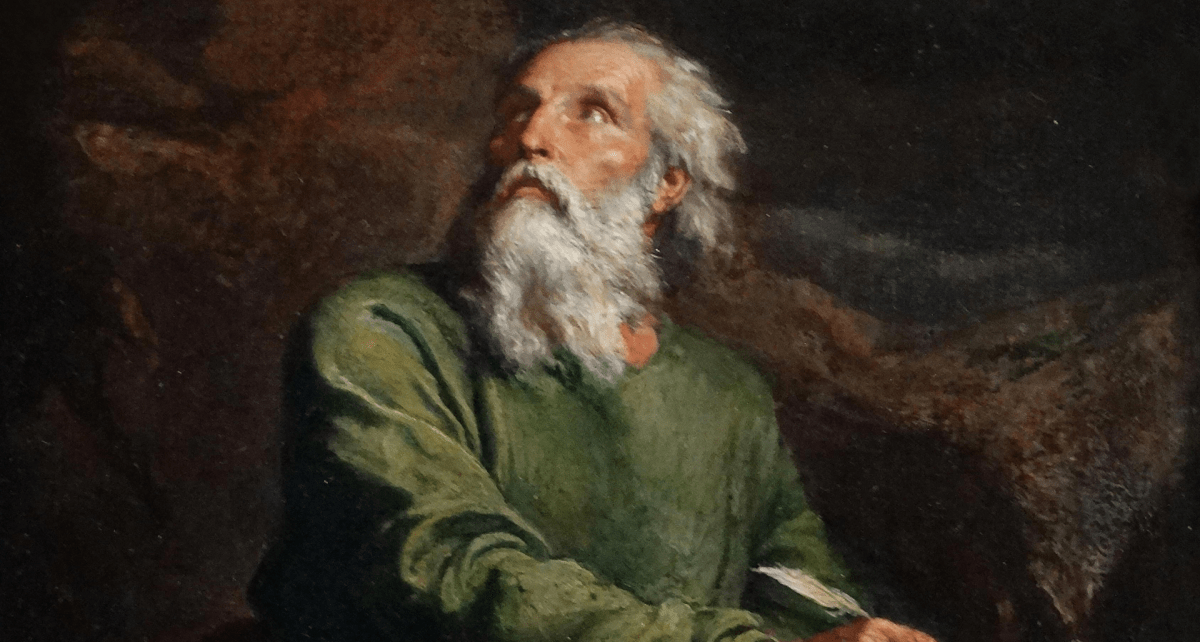
Aside from Jesus Christ, there is probably no more significant, influential or beloved figure in scripture than Isaiah. Isaiah is quoted 85 times in the New Testament, second only to the Psalms. The Book of Mormon contains 21 full chapters, eight additional citations, and 22 paraphrases from Isaiah. Joseph Smith’s revelations are replete with direct quotes or paraphrases from Isaiah. (He butchered Isaiah 66 when he composed D&C 133 in 1832). In Isaiah we find alleged prophecies of a Messiah and hopes of reconciliation, restoration, and according to some, an eschatological period of peace known as the “millennium.” John Sawyer wrote that Isaiah “has played a unique role in all kinds of context, from the cult of the Virgin Mary to anti-Jewish polemic, medieval passion iconography, and twentieth century Christian feminism and liberation theology.” He adds,
“The pages devoted to Isaiah in the Oxford Dictionary of Quotations further demonstrate the extent of [Isaiah’s] influence beyond his immediate Christian context within the Church, on English literature and western European culture in general. Messianic titles like ‘Immanuel’ (7:14), ‘Prince of Peace’ (9:6) and ‘the Key of David’ (22:22) that have become an integral part of the Christian vocabulary, are Isaianic, as such universally familiar expressions as ‘swords into ploughshares’ (2:4), ‘the wolf dwelling with the lamb’ (11:6-9), ‘a voice crying in the wilderness’ (40:3), ‘a man of sorrows’ (53:3), ‘a light to the nations’ (42:6, 49:6), ‘good news to the poor’ (61:1), and ‘a new heaven and a new earth’ (65:17). ‘My house shall be called a house of prayer for all peoples’ (56:7) is inscribed over the entrances to churches, and Isaiah also gave us proverbs like ‘There is no peace for the wicked’ (48:22, 57:21). (The Fifth Gospel: Isaiah in the History of Christianity, p. 3).
Despite Isaiah’s religious and cultural influence, he remains largely misunderstood. I think there are three main reasons for this. First, we are 2,500-2,700 years removed from the culture that produced the prophetic books (Isaiah, Jeremiah and Ezekiel). Modern Christianity is predominantly apocalyptic and that worldview shades how we read and interpret Isaiah. Second, the Isaiah we have today isn’t the Isaiah that left the original author’s pen. Of this there is little doubt. The Hebrew Bible was anything but static. Third, the Gospel writers reinterpreted key Isaian passages into prophecies of Christ. Our job is to determine what the original Isaiah meant when he wrote his book, however much of it actually came from him. To that end we’re going to review all these things because it may surprise you, even shock you, to learn that Isaiah didn’t prophesy of Christ (7:14, 9:6) nor of a “millennium” (2:2-4, 11:6-9). Isaiah, as a prophet, did make prophetic announcements that were much later interpreted as prophecies of Christ, but they are not directly about Him in their original context.
In Isaiah 40-55, often referred to as Second Isaiah or Deutero-Isaiah, we find multiple references to the Servant of the Lord, or “ébed YHWH.” Over the last several years I’ve heard many theories as to the identity of this “Servant.” Most believe it is Christ, which is understandable considering the Gospel writers believed so. Others believe Joseph Smith is going to rise from the dead to assume the role at some future date. The Servant is also variously referred to as “the Davidic Servant,” “marred servant,” or “end-times servant.” These are all wrong and we know this because Isaiah plainly gives us the identity of the Servant at least eight times. The “Servant” is the representation of the nation of Israel, or more appropriately, the righteous heart of idealized Israel.
Within Isaiah 40-55 we find a collection of “Servant Songs,” which reveal Israel’s unique calling to serve as a witness to and messenger of YHWH of the Hebrew Bible, the mortal Christ in Jerusalem, and the resurrected Christ in both Jerusalem and Bountiful. That was Isaiah’s view. That was Nephi’s and Jacob’s view. Moroni also mentioned it. Jesus Himself called the House of Israel his “Servant” when He appeared at Bountiful. This has very real implications for contemporary Mormonism. If we understand the Servant and his mission, we can more readily recognize and dismiss individuals claiming the mantle. They have been out there for the last 200 years, they are here now, and they will be here in the future. I want to give you the tools and knowledge you need to identify these individuals because I have a zero-tolerance policy when it comes to religious fraudsters who prey on the sincere and pure in heart.
The Servant of the Lord and the Servant Songs are two of my favorite subjects in all scripture. Maybe my most favorite. The inclusion of three of the four Servant Songs in the Book of Mormon persuaded me that Joseph Smith didn’t write the Book of Mormon from his own imagination when I was going through some very real doubts about the its authenticity. Joseph simply didn’t have the sophistication, maturity, knowledge or spiritual wisdom to interpret them correctly, much less weave them into the narrative to beautifully demonstrate God’s relationship with Israel.
Before we go in-depth on Israel’s calling as the Servant and the Servant Songs, we need to do some background homework on the Book of Isaiah. I don’t want to get too bogged down in the complex authorship, composition and structure of Isaiah, but we do need to briefly examine them. One of the major objections to the Book of Mormon is the inclusion of passages and chapters from 40-55, which most scholars believe were written during or after the Exile. If that’s the case, the Book of Mormon is dead on arrival. Game over. Finito. However, because Isaiah is such a complex book, I believe there’s a perfectly reasonable solution. As Marvin Sweeney writes,
“Altogether, the book appears to have gone through at least four stages of composition: first, during the lifetime of Isaiah ben Amoz, who witnessed the period of the Assyrian invasions of Israel and Judah in 742–701 BCE; second, during the late seventh-century BCE restoration of King Josiah of Judah (640–609 BCE), when Isaiah was edited to support the king’s reforms; third, during the late sixth-century BCE collapse of Babylon and the rise of King Cyrus of Persia, who authorized the return of exiled Jews to Jerusalem to rebuild the Temple; and fourth, during the late fifth and early fourth centuries BCE when Nehemiah and Ezra attempted to consolidate the Jerusalem Temple’s status as the holy center of Judaism in keeping with their understandings of the Torah and the Isaian tradition. The writers of each stage of Isaiah’s composition edited and expanded the book in order to demonstrate that the prophet also addressed events of their own times.” (The New Oxford Annotated Bible with Apocrypha: New Revised Standard Version, p. 977, emphasis added.)
Just because Isaiah 40-55 appear in a Babylonian context, does not by any means indicate they written during the Babylonian context. The Hebrew Bible, for lack of a better word, was incredibly unstable. This makes the subject much more difficult than it need be, but we’ll do our best to sort it out and try to make some sense of it.
My approach to Isaiah is twofold. First is understanding the geopolitical circumstances surrounding the book that bears his name. Second, because we have the benefit of the Book of Mormon, is the understanding that Jesus Christ is the One and Only God Eternal (YHWH, or “the LORD”) who spoke to Abraham, Isaac, Jacob, Isaiah, Lehi, Nephi and his brother Jacob, and condescended into mortality, the cental message of the Book of Mormon. This knowledge fundamentally changes how the Servant and the Servant Songs should be understood. We’ll discuss the second issue in a separate post.
I am by no means an authority or expert on Isaiah, but I think we can come to some conclusions, specifically on the alleged Messianic prophecies of Jesus, the Servant of the Lord and the Servant Songs. I included a discussion on the Messianic prophecies of First Isaiah (1-39) because they allegedly refer to Jesus, which has bearing on the “Servant,” and to show how easy it is to develop faulty beliefs when we take things out of context. It’s probably a bit of overkill, but I find it very interesting. I’m trying to cram five years of research into a single, coherent post, so I apologize if it’s a bit janky in places.
HISTORICAL CONTEXT AND DEVELOPMENT
Isaiah, known in Hebrew as yeshaʿyah(u), or “the LORD saves,” lived during a time of great geopolitical turmoil. His commission began with a vision in the year 742 B.C., the same year Uzziah, the tenth king of Judah, died and “coincided with the beginnings of the westward expansion of the Assyrian empire, which threatened Israel, and which Isaiah proclaimed to be a warning from God to a godless people” (Encyclopedia Brittanica). The editors of The New Oxford Annotated Bible provide information on three pivotal historical events that shaped the Book of Isaiah,
“1. The Syro-Ephraimite War. After a period of relative peace for Israel (the Northern Kingdom, often called ‘Ephraim’ in Isaiah after its most important tribe) and Judah (the Southern Kingdom), international tensions rose when Tiglath-pileser III became king of the Assyrian Empire in 745 BCE. He began an effort to conquer the lands to the west of Assyria, including Syria, Israel, and Judah. Beginning in 735 BCE, Pekah, king of Israel (the northern kingdom), and Rezin, king of Syria (Damascus or Aram), tried to enlist Ahaz, king of Judah, in an alliance against Assyria. When that effort failed, they attacked Judah to replace Ahaz with a king more amenable to their policies (Isaiah 7). This conflict is known as the Syro-Ephraimite War, since it was a war of Syria and Ephraim against Judah. Ahaz turned to Assyria for help in fending off Israel and Syria. The price was steep: Judah paid a heavy tribute as a vassal of Assyria.”
Pekah and Rezin figure prominently in Isaiah 7, which we’ll get to below. Continuing,
“2. The Assyrian Invasion. During the decades following the Syro-Ephraimite War, the Assyrians expanded their influence in the area, taking over Syria and then attacking the Northern Kingdom (Israel/Ephraim), which fell in 722 BCE. When the Assyrian ruler at the time, Sargon II, was killed in battle in 705, Hezekiah, the king of Judah and son of Ahaz, rebelled against Assyria. Hezekiah was trying to take advantage of the confusion at the change of rulers, and allied with Merodach-baladan, prince of Babylon, against Assyria (Isaiah 39). In addition, he sought support from Egypt that was not forthcoming (Isaiah 36:6). The new Assyrian king, Sennacherib, retaliated and conquered Judah in 701. Hezekiah was able to avert the conquest of Jerusalem itself only by paying tribute.
3. The Conquest of Jerusalem and the Exile. During the century following these events, the Assyrian Empire gradually weakened. In 612 BCE, the rising Babylonian Empire destroyed the Assyrian capital, Nineveh, and the international power struggle became one between Babylon and Egypt, with Judah caught between. In 605 the Babylonian king, Nebuchadnezzar, defeated the Egyptian pharaoh, Neco, at the battle of Carchemish, and Babylon became the leading empire of the day. (This is where the Book of Mormon narrative begins.) Judah came under Babylon’s control, and when the last king of Judah, Zedekiah, rebelled against Babylon, the result was an invasion by Nebuchadnezzar. In 586 Nebuchadnezzar destroyed Jerusalem and its Temple and exiled a good deal of the surviving population to Babylonia” (p. 977-978. It was around the time that Jerusalem was sacked that Mulek, son of King Zedekiah, was led out of Jerusalem to the promised land. Mosiah 1 discovered his descendants, whose language had been corrupted, in Zarahemla around 150 BC).”
Isaiah was sent as God’s emissary to the kings of Judah during the Syro-Ephraimite conflict. Prophets, or ‘navi.'(נביא) in Hebrew, served as God’s “covenant enforcers” and social critics keeping leadership in check and preaching repentance and faith in God. We read in Isaiah’s account of his vision of the heavenly throne that he “heard the voice of the Lord saying, ‘Whom shall I send? And who will go for us?’ And I said, ‘Here am I. Send me!'” (Isaiah 6:8). If this sounds familiar, Joseph Smith appropriated Isaiah’s commission in the Book of Abraham. According to that text, Jehovah oversaw the Divine Council in which “One Like unto God” (Michael) suggests members of the Council go down and form the earth. “The Lord (Jehovah) said: Whom shall I send? And one answered like unto the Son of Man (Jesus): Here am I, send me” (3:25). Unless Jesus, who is Jehovah, is volunteering to himself, this never happened. Joseph’s infamous “one mighty and strong” prophecy, which is a direct reference to someone taking Bishop Partridge’s place in parsing out inheritances in Missouri and not an “end-times servant,” is borrowed from Isaiah 28:4 “Behold, the Lord hath a mighty and strong one,” only the “mighty and strong one” refers to Shalmaneser V, king of Assyria, whom, according to the text, God used as the instrument of destruction against the northern kingdom of Israel in 722 B.C. (Joseph’s threat against Bishop Partridge never came to fruition, incidentally. There is no future “one mighty and strong,” so you can immediately dismiss anyone claiming to be that person.)
Joseph was far from the only person to take liberties with Isaiah. Second Temple Israelites, Paul, the Gospel writers, the church fathers, Martin Luther, the King James Bible translators, Handel, Messianic Jews, and countless theologians, pastors and Christians have taken the writings of Isaiah and repurposed them as they felt necessary. L. Michael White addressed the reinterpretation of the Hebrew prophets, for example, during the Hellenistic era in his excellent book, Scripting Jesus,
“…these prophetic writings were further reinterpreted through the rise of the apocalyptic worldview (~200 BC-100 AD), which has been called ‘the child of prophecy’ in a new idiom. What this means is that the apocalyptic, while often confused with or called ‘prophecy,’ is actually a new medium of interpretation. It assumes that works or episodes of divinely generated ‘revelation’ continue and have relevance for new situations. In addition, it is facilitated by transforming the prophetic of earlier figures, such as Isaiah or Jeremiah, which were always addressed to their own day, into future predictions regarding an eschatological age.” (p. 191, emphasis added.)
For Christians, this eschatological age is understood to be “the millennium.” (Again, not once does scripture say God/Jesus will dwell on earth for 1,000 years.) After Jesus’ mortal ministry, early Christians turned Isaiah’s prophecies found in chapters 7 and 9, and later apocalyptic works such as Daniel, into predictions of a forthcoming Messiah we know as Jesus Christ. In Daniel 7:13-14 we are introduced the mysterious “son of man” figure who appears before the “Ancient of Days” (who is God, not “Adam” as Mormonism teaches) and was “given him dominion, and glory, and a kingdom, that all people, nations, and languages, should serve him: his dominion is an everlasting dominion, which shall not pass away, and his kingdom that which shall not be destroyed.” But as Larry Hurtado writes, “there is no evidence of ‘the Son of Man’ used as a title of a redeemer-figure in 2nd temple Jewish texts/traditions. The expression in Daniel 7:13-14 isn’t a title but simply ‘one like a son of man,’ i.e., a figure that looks like a human.” L. Michael White adds that “son of man’ was not typically a messianic title” (Scripting Jesus, p. 238). He also correctly notes that in some instances “son of man” in the New Testament seems to refer to someone other than Jesus. John J. Collins, the world’s foremost authority on apocalyptic literature, wrote, “there is no doubt that Daniel 7 is describing the persecution of Jews under Antiochus Epiphanes. The exaltation of the one like the son of man represents the triumph of the Jews.” (The Apocalyptic Imagination, p. 102-103, emphasis added). This “representation” figures into our discussion of the Servant. I highly doubt Jesus ever used that title or those words to describe Himself. The Gospel writers, undoubtedly by influenced such apocalyptic texts, assumed it represented a messianic figure and put “Son of Man” on Jesus’ lips. And for what it’s worth, “Son of Man” as a title for Jesus never appears in the Book of Mormon but appears very frequently in Joseph’s revelations.
Matthew, Luke, John, 1 Peter and Acts all reference Isaiah 53, or the “Suffering Servant,” as a prophecy of Christ. However, Bart Ehrman correctly noted, “These passages are not talking about the messiah. The messiah is never mentioned in them. Anyone who thinks they *are* talking about the messiah, has to import the messiah into the passages, because he simply isn’t there. I should stress that no one prior to Christianity took these passages to refer to a future messiah.”
He’s right and we’re going to go in-depth on the Suffering Servant later. The truth of the matter is that one is very hard-pressed to find a direct prophecy of Christ in the Hebrew bible—at least as we have it now. Interestingly, Nephi mentioned several Hebrew prophets who did prophesy of Christ but have been lost to history,
“And the God of our fathers, who were led out of Egypt, out of bondage, and also were preserved in the wilderness by him, yea, the God of Abraham, and of Isaac, and the God of Jacob, yieldeth himself, according to the words of the angel, as a man, into the hands of wicked men, to be lifted up, according to the words of Zenock, and to be crucified, according to the words Neum, and to be buried in a sepulchre, according to the words of Zenos, which he spake concerning the three days of darkness, which should be a sign given of his death unto those who should inhabit the isles of the sea, more especially given unto those who are of the house of Israel…” (1 Nephi 19:10-11)
We can be sure the Bible isn’t a complete record of the Hebrew prophets and God’s dealings with Israel. There are also 22 books mentioned in the Bible that aren’t in the Bible. Further, the Hebrew prophets, so far as we know, were quiet from Malachi to Christ, a period of roughly 400 years. That’s about the same amount of time from the settling of Jamestown, Virginia to today.
Historical context and the incomplete record aren’t the only issues. We also have the difficulty of interpretation. Nephi, aware of the Isaian difficulties, transcribed Isaiah 2-14 into his record and then added, “Now I, Nephi, do speak somewhat concerning the words which I have written, which have been spoken by the mouth of Isaiah. For behold, Isaiah spake many things which were hard for many of my people to understand; for they know not concerning the manner of prophesying among the Jews” (2 Nephi 25:1-2, emphasis added). It took less than a generation for the Nephites to be severed from their cultural and theological roots. How much worse off are we?
CHRISTOLOGICAL REINTERPRETATION OF ISAIAH
The Gospel writers drew heavily and freely on the Hebrew scriptures when narrativizing the life of Jesus. We read a lot of “so it might be fulfilled” in Matthew, with a reference to the Hebrew Bible, but read in context those prophecies have nothing to do with Jesus. They weren’t lying or creating fiction, rather they were following conventions of Greco-Roman biography, including “establishing the origins and ancestry of the author, a focus on the main subject’s great words and deeds, a focus on the death of the subject and the subsequent consequences” and the “promotion of a particular hero (where non-biographical writings focus on the events surrounding the characters rather than the character himself), the domination of the use of verbs by the subject,” and “….the prominence of the final portion of the subject’s life.” Critics of Christianity have had a field day with the inconsistencies and contradictions in the Gospels and the reinterpretation prophetic of oracles found in the Hebrew Bible. The historian Robert Wilken noted,
“The practice of allegorizing the Old Testament—giving certain passages a meaning other than the plain sense—was not an invention of the Church Fathers or the Middle Ages; it was the work of the authors of the books of the New Testament. And in their exegesis of the Old Testament, patristic commentators consciously imitated what they had learned from the New Testament.” (Emphasis added.)
One of the earliest examples comes in the Gospel of Matthew, whose anonymous author drew from the Hebrew scriptures more than his fellow evangelists. The writer relates Joseph’s dream in which the messenger angel said,
“‘Joseph son of David, do not be afraid to take Mary home as your wife, because what is conceived in her is from the Holy Spirit. She will give birth to a son, and you are to give him the name Jesus, because he will save his people from their sins.’ All this took place to fulfill what the Lord had said through the prophet: ‘The virgin will conceive and give birth to a son, and they will call him Immanuel’ (which means ‘God with us’)” (Matthew 1:22-23).
I don’t see any reason to doubt Joseph had such a dream, but Matthew, writing to a Jewish audience, applied it to Jesus. Taking his cue from Matthew, Martin Luther likewise proclaimed that Isaiah “describes, in Isaiah 7:14, the Mother of Christ, how she is to conceive and bear Him without injury to her virginity.” However, if we read this “prophecy” in context of the Assyrian invasion, a different picture emerges. Ahaz, king of Judah, had before him two potential courses of action: political alliance with a foreign nation, or as Isaiah suggested, trust in YHWH for deliverance from their enemies. YHWH even offered Ahaz a sign of His commitment:
“Moreover the Lord (YHWH) spake again unto Ahaz, saying, Ask thee a sign of the Lord thy God; ask it either in the depth, or in the height above. But Ahaz said, I will not ask, neither will I tempt the Lord. And he said, Hear ye now, O house of David; Is it a small thing for you to weary men, but will ye weary my God also? Therefore, the Lord himself shall give you a sign; Behold, a virgin shall conceive, and bear a son, and shall call his name Immanuel. Butter and honey shall he eat, that he may know to refuse the evil, and choose the good. For before the child shall know to refuse the evil, and choose the good, the land that thou abhorrest shall be forsaken of both her kings.” (Isaiah 7:10-16)
There’s nothing here about a future redeemer. To properly interpret this passage, we have to understand the concept of prophetic naming. “Immanuel” is the first of three such prophetic names found in Isaiah 7-9, which were given in relation to the current political crisis. We’ll look at the first and third as they are believed to relate to Jesus.
Thomas Starke explains that “Ancient names frequently included reference to some god or divine activity. Joshua’s name means ‘Yahweh saves,’ and Azariah means ‘Yahweh helps,’ but neither Joshua nor Azariah were therefore understood to be Yahweh in the flesh” (Human Faces of God. Location: 1036). The child named “Immanuel” (God with us) signified God’s promise to Judah that He was with them and that it wouldn’t fall to Assyria as the northern kingdom had. Matthew’s understanding was correct: Jesus is God. We know this from the Book of Mormon. He simply used the wrong passage to support his claim. I’m also not aware of Jesus ever being called “Immanuel” or the two kings being deposed from their thrones during His life.
There are other important factors to consider. First, the sign was given to Ahaz, then king of Judah. The prophecy had to be relevant to him, not 700 years in the future. Second, the original Hebrew states the “virgin” in question was already pregnant, or in Hebrew “hara.” (Isaiah 26:17 in the KJV correctly translates “harah” as “a woman with child.” The NLT, NIV and ESV translate 26:17 as “pregnant”). Third, who are the two kings? We read in Isaiah 7:1, “And it came to pass in the days of Ahaz the son of Jotham, the son of Uzziah, king of Judah, that Rezin the king of Syria, and Pekah the son of Remaliah, king of Israel, went up toward Jerusalem to war against it, but could not prevail against it.” The child can’t be Jesus because according to the prophecy Rezin and Pekah would both be dethroned before the child would “know to refuse the evil and choose the good,” probably meaning a young child recently weaned. Fourthly, “butter (or cream) and honey” is an important detail. As Starke explains, it refers “to the land having been recently ravaged by the Assyrians and that the people were forced to eat uncultivated food rather than bread and wine.” This didn’t happen in Jesus’ time.
Adding to the difficulty of these verses, the author of Matthew used the Septuagint, the Greek translation of the Hebrew bible made sometime around 275 BC, as a source text. The Septuagint uses the word “parthenos” (παρθένος) in Isaiah 7:14 to refer to the child’s mother, which carries the same significance “virgin” does today. (The Parthenon, the temple dedicated to the goddess Athena, shares the same meaning.) The original Hebrew, however, uses the word “almah” (לִשְׁאֹ֔ב) which simply means a young woman or maiden of child-bearing age. So, who is the child if it’s not Jesus? There’s a lot of debate on the subject. Some have suggested Hezekiah, Ahaz’s son, while others have suggested it was one of Isaiah’s sons. Whomever he was, he was born shortly after this prophecy was given.
The second example, and maybe the most well-known, is found in Isaiah 9:6 which reads, “For unto us a child is born, unto us a son is given: and the government shall be upon his shoulder: and his name shall be called Wonderful, Counsellor, The mighty God, The everlasting Father, The Prince of Peace.” If you’ve ever been so a Messiah Sing-In, you know how powerful it is to sing these words to Handel’s score. The last time I went to Abravanel Hall for a sing-in a few decades ago, it brought me and a lot of other people to tears. Unfortunately, these verses have nothing to do with Jesus. Let’s again read them in context of the Assyrian invasion,
“…Nevertheless the dimness shall not be such as was in her vexation, when at the first he lightly afflicted the land of Zebulun and the land of Naphtali, and afterward did more grievously afflict her by the way of the sea, beyond Jordan, in Galilee of the nations. The people that walked in darkness have seen a great light: they that dwell in the land of the shadow of death, upon them hath the light shined. Thou hast multiplied the nation and not increased the joy: they joy before thee according to the joy in harvest, and as men rejoice when they divide the spoil. For thou hast broken the yoke of his burden, and the staff of his shoulder, the rod of his oppressor, as in the day of Midian.
“For every battle of the warrior is with confused noise, and garments rolled in blood; but this shall be with burning and fuel of fire. For (because) unto us a child is born, unto us a son is given: and the government shall be upon his shoulder: and his name shall be called Wonderful, Counsellor, The mighty God, The everlasting Father, The Prince of Peace. Of the increase of his government and peace there shall be no end, upon the throne of David, and upon his kingdom, to order it, and to establish it with judgment and with justice from henceforth even for ever. The zeal of the Lord of hosts will perform this.” (Isaiah 9:5-7, KJV)
This time the child was given the Hebrew name “Pele-joez-el-gibbor-abi-ad-sar-shalom.” It might be better translated as “Wonderful in counsel is the Hero God, the Everlasting Father, the Ruler of Peace.” It doesn’t mean the child was God. Again, the name signified God’s characteristics or what God would do in context of the current crisis, just as “Immanuel” signified God was with them. These titles can be applied to Jesus, certainly, but they aren’t explicitly about Jesus nor are they a prophecy of Jesus. Another difficulty is that the original Hebrew is written in the perfect passive tense: “a child has been born…a son has been given.” Christian translators, surely influenced by Matthew’s Gospel, exposed their biases by removing the past tense. The child in question this time very likely refers to Hezekiah, Ahaz’s son, had already been born. It was later written of Hezekiah,
“Hezekiah trusted in the Lord, the God of Israel. There was no one like him among all the kings of Judah, either before him or after him. He held fast to the Lord and did not stop following him; he kept the commands the Lord had given Moses. And the Lord was with him; he was successful in whatever he undertook. He rebelled against the king of Assyria and did not serve him. From watchtower to fortified city, he defeated the Philistines, as far as Gaza and its territory.” (2 Kings 18:5-6)
There’s probably a bit of bias in this passage, but that’s fine. Mormon writes in similarly glowing terms of Captain Moroni, declaring that if all were like unto Moroni the very gates of hell would quake. This passage has presented all sorts of problems for Christians, at least for those who are aware of the issue. In order to make Isaiah 7-9 about Jesus, they have to strip Isaiah of all historical context and invoke “multiple fulfillments.” My issue with this approach is that if we can make Isaiah 7-9 about Jesus, we can take any passage of scripture and torture it until it means exactly what we want it to mean. We disrespect the writers and God if one believes the scriptures are inspired, when we make scripture in our image and for our purposes.
Let’s look at an example of how the Gospel writers reinterpreted Isaiah. According to the Lukan account, Jesus Himself quotes Isaiah when he went to the synagogue in Nazareth after being tempted by the devil,
“And there was delivered unto him the book (scroll) of the prophet Esaias (Isaiah). And when he had opened the book, he found the place where it was written, ‘The Spirit of the Lord is upon me, because he hath anointed me to preach the gospel to the poor; he hath sent me to heal the brokenhearted, to preach deliverance to the captives, and recovering of sight to the blind, to set at liberty them that are bruised, To preach the acceptable year of the Lord. And he closed the book, and he gave it again to the minister, and sat down. And the eyes of all them that were in the synagogue were fastened on him. And he began to say unto them, This day is this scripture fulfilled in your ears.” (Luke 4:16-21)
While this passage makes for compelling theology, it’s difficult history. Elliot’s Bible Commentary notes that Luke “reproduces, with a few unimportant variations, the LXX. version (Septuagint) of Isaiah 61:1-2. The words ‘to heal the broken-hearted’ are not in the best [manuscripts]. ‘To set at liberty them that are bruised’ is not found in the present text of Isaiah.” L. Michael White adds,
“The scripture here ‘read’ by Jesus is actually a composite of two different passages from the Septuagint: Isaiah 61:1-2 and 58:6. In fact, the phrase from 58:6 (‘to let the blind go free’) is inserted between Isaiah 61:1 and 2. Because these passages are so far apart in the actual text of Isaiah, there is no way a person could see or read both of them at the same time if holding a scroll. In addition, a portion of Isaiah 61:1 has been omitted, as has the latter part of verse 2, while the phrase ‘recovery of sight to the blind’ occurs only in…the Septuagint” (Scripting Jesus, p, 327).”
We know from Luke’s account that his gospel is at best second-hand (Luke 1:1-2), so it seems unlikely Jesus actually said and did this, unless Jesus was an imposter making up scripture on the fly. My question is if Jesus is the Lord, is His spirit on Himself? Also compare Jesus’ alleged statement that “the Lord…hath anointed me to preach the gospel to the poor,” indicating He wasn’t the Lord, to His statement to Nephi on the eve of His condescension into mortality,
“…on this night shall the sign be given, and on the morrow come I into the world, to show unto the world that I will fulfil all that which I have caused to be spoken by the mouth of my holy prophets. Behold, I come unto my own, to fulfil all things which I have made known unto the children of men from the foundation of the world, and to do the will, both of the Father and of the Son—of the Father because of me, and of the Son because of my flesh.” (3 Nephi 1:13-14, emphasis added. Jesus as “son” signifies His mortality, not that He is literally God’s “son.” See also Mosiah 15:1-2 in which Abinadi said “that God himself shall come down among the children of men and shall redeem his people. And because he dwelleth in flesh he shall be called the Son of God.”)
The Jesus of Luke is called by God while the Jesus of the Book of Mormon is God. Again, the point of the Book of Mormon is to make known to Jew and Gentile that “Jesus is the Christ—the Eternal God. But what about the devil? Contemporary Christians haven’t done much better than the Gospel writers. Isaiah 14 has commonly been interpreted by Christians as a reference to Satan or the devil (“Lucifer”) “falling” from heaven. Isaiah 14, however, has nothing to do with the devil. How do we know? It tells us. In Isaiah 14:4 we read, “…thou (Isaiah) shalt take up this proverb against the king of Babylon.” The Lord taunts the boastful king (the king may represent the entire Babylonian kingdom) by sarcastically using the traditional funeral lament found in 2 Samuel 1, saying, “Thy pomp is brought down to the grave, and the noise of thy viols: the worm is spread under thee, and the worms cover thee. How art thou fallen from heaven, O Lucifer, son of the morning! how art thou cut down to the ground, which didst weaken the nations!” (vs.11-12). “Lucifer” is the Latinization of the Hebrew hêlēl (הֵילֵל), which means “morning star” or “shining one.” According to Strong’s Greek Concordance, “In ancient Near Eastern cultures, celestial bodies like stars and planets were often associated with deities or powerful beings. The term ‘morning star’ was used to describe Venus, which appears brightly in the morning sky.” In chapter 14 Isaiah the poet likely drew on the Canaanite myth of the demigod Helel (Venus), who tried to usurp power from the god El. As Gale Yee explains,
“The poet transmits an ancient myth of the demigod Helel in the form of a dirge. By imbedding this dirge in the center of the overall lament, the poet assimilates the tyrant to this primordial figure, identifying the tyrant’s rise and fall with that of Helel, the Bright One. Thus, for the poet, the tyrant’s transgression, his harsh oppression of the people, is ultimately traceable to his consummate arrogance in desiring to be like God.” (“The Anatomy of Biblical Parody: The Dirge Form in 2 Samuel 1 and Isaiah 14.” The Catholic Biblical Quarterly, vol. 50, no. 4, 1988, pp. 565–86. Emphasis added.)
Rather than describing a fallen angel, Isaiah 14 sarcastically describes the fall of a very human king with deific ambitions by using a funereal dirge to emphasis the point. Isaiah was as much poet as he was prophet. Joel Baker noted the “text’s creativity in skewering his supposedly exalted stature is a rhetorical tour de force.” How, then, did we end up with “Lucifer” in the Bible? In 382 AD Pope Damasus commissioned Jerome to revise the Latin Gospels (Vetus Latina) then used by the Catholic church. Jerome later translated much of the Hebrew Bible into Latin from the original Hebrew rather than the Septuagint. This work became known as the Vulgate. As a Roman citizen born in Stridon in the Province of Dalmatia, Jerome would naturally draw from his own language and culture to produce a work understood by those who read Latin. The Roman Mythologist, Pseudo-Hyginus wrote in the 2nd century AD, “The fourth star is that of Venus, Luciferus by name…It seems to be the largest of all stars.” When Jerome came to Isaiah 14 and encountered helel in the text and knowing it referenced Venus, he appropriately used “Lucifer.” Those who read the Vulgate would have perfectly understood that Lucifer was a reference to Venus. Both John Wycliffe, who produced the first partial English translation of the Bible (ca. 1382), and Myles Coverdale, who produced the first complete English translation of the Bible (1535) used the Vulgate as source material and retained Jerome’s translation of Helel, “Lucifer” (likely because they weren’t Greek or Hebrew scholars). By the time the King James translators came around, “Lucifero” was already a common name for the devil, and I assume that since they believed Isaiah 14 documented “Satan’s” fall from heaven, they reatained “Lucifer.” Modern translations have ditched “Lucifer” in favor of “morning star” (NIV), “shining star” (NLT), and “Day Star” (ESV). Interestingly, Wycliffe is called “The Morning Star of the Reformation.”
It was only later that “Lucifer,” the Moring Star, Shining One or Light-Bearer, became known as “Satan” or “the devil” within Christianity (and cemented in John Milton’s 1667 epic “Paradise Lost,” in which “Lucifer” leads the angelic rebellion against God). This designation of Satan as “morning star” might be a bit uncomfortable, however, considering Jesus refers to Himself as “the bright Morning Star” in Revelation 22:16. In classical mythology, Lucifer was personified as a male figure holding a torch, so it seems to be an appropriate self-designation and familiar to first century readers of the Revelation.
What does this mean for D&C 76 in which Joseph Smith and Sidney Rigdon claimed they saw in a joint vision “an angel of God who was in authority in the presence of God” who “was thrust down from the presence of God and the Son, And was called Perdition, for the heavens wept over him—he was Lucifer, a son of the morning And we beheld, and lo, he is fallen! is fallen, even a son of the morning!”? You’ll have to decide for yourself.
We’ve done a pretty terrible job with Isaiah over the last 2,000 years, and I didn’t even touch on the “millennium.” With that information in hand, and seeing how easy it is to misinterpret Isaiah, let us turn to the not-so-mysterious “Servant” of Deutero-Isaiah and see if we can determine his identity.
THE SERVANT OF YHWH
If you’re anything like me, you skipped right past them most of your life. I wanted to get to the good stuff: Mosiah leading the Nephites to Zarahemla, Teancum’s stealth assassination of Ammoron (Alma 62:35), Helaman’s stripling warriors, Samuel the Lamanite, and Jesus’ appearance at Bountiful. I had very little time for doctrine when I was younger, but now it’s what I love, especially all the Isaiah passages. Isaiah itself is a very complex book, both in structure and doctrine. We like to think the inspired writers of the Bible received revelation which were recorded in chronological order. The reality is less comforting.
The highly influential German Lutheran theologian Bernard Duhm pioneered the theory that Isaiah was, in fact, three independent literary units commonly known today as Proto-Isaiah (chapters 1-39), Deutero-Isaiah (chapters 40-55) and Trito-Isaiah (chapters 56-66). Some recent scholarship divides Isaiah into two thematic sections: chapters 1-33 (warnings and condemnations) and 34-65 (restoration and return from Exile). As it stands right now, it’s generally agreed that Proto-Isaiah (1-39) dates to the time of Isaiah the prophet, Deutero-Isaiah (40-55) dates to the Babylonian Exile, and Trito-Isaiah (56-66) dates to the post-Exilic era, but other interpretations exist. Complicating issues, Isaiah can be further subdivided within each unit. Chapters 24-27, sometimes called “The Apocalypse of Isaiah” (though there is some debate if it’s truly an apocalypse) was almost certainly a much, much later addition, and some have suggested that 34-35, the vision of Zion, is also a later addition. There’s a mountain of scholarship and interpretation and opinion on Isaiah and it’s all very difficult to decipher. I don’t think there’s any doubt that the Isaiah we have neatly arranged in modern Bibles is the same Isaiah that left the pen of the prophet. The Book of Isaiah, like all scripture, was shaped and molded over time before reaching its final state. Given that Isaiah features so prominently in the Book of Mormon, this has very real implications.
To identify the Servant of the Servant Songs, we need to briefly review some of the history on the book where he makes his first appearance: Deutero-Isaiah. The inclusion of passages from chapters 40-55 are extremely problematic for the Book of Mormon if they were, in fact, written during or after the Exile. Since Lehi and his family left Jerusalem about three years before the first Israelites were exiled and 13 years before the second wave was exiled, it would be impossible for those chapters to be included in the brass plates. And if that’s the case, as I mentioned at the beginning, it’s the death knell for the Book of Mormon. But that presumes the Book of Isaiah we have today was somehow insulated from later interference, which as mentioned, is undoubtedly not the case. The more important question to ask is which parts of Deutero-Isaiah are found in the Book of Mormon? Deutero-Isaiah itself has two thematic sections: chapters 40-48 and 49-55. With two minor and insignificant paraphrases, all the Deutero-Isaiah citations in the Book of Mormon come from 48-55 and there are compelling arguments that 49-55 were not written during the Exile. As a side note should not expect to find any citations from Trito-Isaiah and we don’t.
The best evidence for Babylonian authorship of Deutero-Isaiah, at least 40-48, is YHWH’s appointment of Cyrus, King of Persia during the Exile as God’s anointed and Israel’s “messiah” to lead the back to Jerusalem after the Babylonian captivity and rebuild the temple. According to the text, it was the Lord (YHWH),
“…who says of Cyrus, ‘He is my shepherd and will accomplish all that I please; he will say of Jerusalem, ‘Let it be rebuilt,’ and of the temple, ‘Let its foundations be laid.’ This is what the Lord says to his anointed to Cyrus, whose right hand I take hold of to subdue nations before him and to strip kings of their armor, to open doors before him so that gates will not be shut: I will go before you and will level the mountains; I will break down gates of bronze and cut through bars of iron. I will give you hidden treasures, riches stored in secret places, so that you may know that I am the Lord, the God of Israel, who summons you by name.” (Isaiah 44:28-45:1-3)
The present tense supports the Babylonian hypothesis. Some Christian exegetes see this as an example of predictive prophecy, but a fair number of scholars, including Charles Torrey, whose 1928 book on Second Isaiah remains highly influential in Isaiah studies, view “Cyrus” as a later insertion into the text and should be deleted. He also noted that 49-66 may not be Babylonian in origin,
“The theory of the exilic origin of Is. 40-66, which is one of the oldest theories in the history of Biblical criticism, began to receive important modification before the end of the eighteenth century, namely in the qualification that not all of the prophecy was written in Babylonia; and this significant revision of the older theory received the support of a steadily increasing number of scholars. It is indeed plain to see that numerous passages, especially in the latter part of the book, point to Palestine as the land of their authorship. The chapters thus marked by Biblical experts as Palestinian include, first or last, the whole series 49-66.” (Second Isaiah: A New Interpretation, p. 4.)
Torry argues that 49-66 are post-Exilic, but Bart Ehrman noted, “It is not known whether the author of 2 Isaiah has inherited these passages from an earlier tradition that he has incorporated into his book or if they are his own creation” (Emphasis added.) In other words, just because all of Deutero-Isaiah appears in an Exilic or post-Exilic context does not necessarily mean they were written during or after the Exile. Given that Isaiah is essentially an anthology of various manuscripts written non-chronologically, shaped, modified and edited over many centuries, we just don’t know what the original looked like. We see this non-chronological placement of the text in other Biblical books. The creation story of Genesis 1, for example, was very likely written after the Exile, yet it was placed at the beginning of the Hebrew Bible (and Genesis 1 is the first of two independent creation accounts in Genesis, the other being Genesis 2, demonstrating that multiple texts were used in creating the canonized account). The “Song of Sea” (or, Shirat HaYam, Exodus 15:1-18) is written in Archaic Hebrew that predates that actual Exodus, suggesting it was added to the text. It’s entirely plausible that parts of Deutero-Isaiah existed prior to the Exile and were edited and incorporated into the text by a later editor/redactor to reflect, as L. Michael White wrote, to reflect their their current circumstances. The view that the inclusion of Isaiah 48-55 automatically discredits the Book of Mormon isn’t the slam dunk critics believe it be.
Let us now finally turn to the “Servant.” In both correlated and uncorrelated Mormonism, the Servant is variably seen as Jesus, a Davidic Servant, the Marred Servant, Joseph Smith returned from the dead, the One Mighty and Strong, or some as yet unknown “end-times servant.” Speculation runs rampant about the alleged appearance of this servant in the latter-days to expedite the Lord’s work, gather Zion, etc., with some claiming the mantle over the last 200 years of Mormonism. However, if we simply let the text speak for itself, we don’t need speculate on the Servant’s identity because it’s plainly revealed:
“You, Israel, are My servant, Jacob whom I chose, the seed of Abraham My friend.” (41:8)
“You are My witnesses,” declares the Lord, and “My servant whom I have chosen. (43:10-11)
“Yet hear now, O Jacob My servant and Israel, whom I chose…” (44:1)
“Remember these, O Jacob and Israel, for thou art My Servant…thou art My servant, O Israel.” (44:21)
“For the sake of My servant Jacob, and Israel My chosen one…” (45:4)
“The Lord has redeemed His servant Jacob.” (48:20)
“Thou art my servant, O Israel, in whom I will be glorified.” (49:1)
“Of the travail of his soul he shall see to the full, even My servant…” (53:1)
Some years ago I stumbled across a Facebook conversation about Isaiah’s “Servant” in a group that believes the “Servant” is Joseph Smith, who will someday return from the dead to complete his “second mission.” I wish I were making this up, but there a lot of people who believe Joseph’s coming back. (A few years ago, someone told me that Joseph Smith was currently in the Salt Lake City Temple translating the sealed portion.) I told one commentor that we don’t need to speculate about the identity of the “Servant” because the text plainly tells you who it is. His response was, “Isaiah does not tell you who the servant is.” I copied the above passages into my response and wrote that Isaiah identifies the “Servant” as Israel. His response was, “The Servant can’t be a nation! It has to be a man!” I replied, “Then tell me what these verses mean.” He never responded and shortly thereafter unfriended me. Another acquaintance of mine then replied, “It’s pretty clear that the servant is Israel.” This remains one of the most surreal experiences of my entire life. This person was so committed to the idea that the Servant was a Joseph Smith that the Lord saying, “You, Israel, are my servant” wasn’t enough to persuade him otherwise.
The biggest stumbling block, I believe, is that we don’t understand the concept of the “corporate identity” in which a singular servant represents the collective nation of Israel. “Corporation” is derived from the Latin “corpus,” or body. It is the singular representation of a group of people. Paul, for example, wrote to the Corinthian church, “Now you are the body of Christ, and each one of you is a part of it (1 Corinthians 12;27). We all understand that the singular body, or corpus, of Christ is made up all believers. The “son of man” of Daniel (7:13-14) is the corporate representation of “the holy ones of the most high” (7:18) It’s no different with the Servant of Isaiah. “In support of a collective reference,” G.P. Hugenberger noted, “it may be noted that the singular terms ‘my servant,’ ‘his servant,’ and ‘servant’ appear twenty-five times in the book of Isaiah. In twelve of these (all in chapters 40-53) the intended reference appears to be Israel.”
We also find the collective servant in Jeremiah 30:10 and 17: “Then fear not, O Jacob my servant, declares the LORD, nor be dismayed, O Israel; for behold, I will save you from far away, and your offspring from the land of their captivity. Jacob shall return and have quiet and ease, and none shall make him afraid.” Israel is again referred to in the singular in v. 17: “For I will restore health unto thee, and I will heal thee of thy wounds, saith the LORD; because they called thee an Outcast, saying, This is Zion, whom no man seeketh after.”
One day I was watching a lecture by Yale professor Christine Hayes in which she mentioned the Servant and his calling,
“According to the prophets, God will make Himself known to all the nations, as He once did to Israel. And the universal worship or recognition of YHWH will be established at the end of days. This is a very different idea. And so, as a consequence of this idea, the very notion of Israel’s election is transformed by the prophets. In the Torah books the election of Israel means simply God’s undeserved choice of Israel as the nation to know Him and bind Himself in covenant to Him.
“But in the prophetic literature (Isaiah and Jeremiah), Israel’s election is an election to a mission. Israel was chosen so as to be the instrument of universal redemption, universal recognition of YHWH. (In other words, the “Servant.”) When God comes finally to rescue the Israelites, He will simultaneously reveal Himself to all of humankind. They’ll abandon their idols. They’ll return to Him. A messianic period of peace will follow. And eventually we’re going to see the idea that the mission for which Israel was elected was to become a light unto the nations, a phrase we’re going to see in other parts of Isaiah—Isaiah 49, Isaiah 51.”
We find this idea of Israel as instruments of “salvation” in the Book of Mormon as well. In discussing the coming forth of the Book of Mormon and its rejection by the Gentiles, God said to Nephi,
“And because my words shall hiss forth—many of the Gentiles shall say: A Bible! A Bible! We have got a Bible, and there cannot be any more Bible. But thus saith the Lord God: O fools, they shall have a Bible; and it shall proceed forth from the Jews, mine ancient covenant people. And what thank they the Jews for the Bible which they receive from them? Yea, what do the Gentiles mean? Do they remember the travails, and the labors, and the pains of the Jews, and their diligence unto me, in bringing forth salvation unto the Gentiles?” (2 Nephi 29:4. “Travails” is an interesting word we’ll see later. Jesus describes the “suffering” of His servant.)
Salvation in this context isn’t the same as the Christian understanding of salvific terms like “redemption,” “atonement,” “expiation,” “justification” or “sanctification.” In the Hebrew bible, “the word ישועה (yeshu’ah) is a noun derived from the verbal root ישע (Y.Sh.Ah), which means ‘relief’ in the sense of being rescued from an enemy, trouble or illness. The King James Version translates this word as help, deliverance, health and welfare, but most frequently as salvation.” (Ancient Hebrew Research Center entry for “Salvation.” They also add, “The word מושיע (moshi’ah) literally means ‘one causing another to be rescued,’ or simply, a ‘rescuer,’ but this word is usually translated as ‘deliverer’ or ‘savior.’ Moshi’ah sure sounds an awful lot like Mosiah. You’ll recall that Mosiah 1 “being warned of the Lord that he should flee out of the land of Nephi, and as many as would hearken unto the voice of the Lord should also depart out of the land with him, into the wilderness…” [Omni 1:12]. I can’t help but wonder if this is another example of prophetic naming.) Hayes continues,
“…Isaiah is typical of the prophetic reinterpretation of the ancient covenant promises. Giving Israel hope for a better, ideal future. And like the other prophets, he declared the nation was in distress not because the promises weren’t true, but because they hadn’t been believed. The nation’s punishment was just a chastisement. It wasn’t a revocation of the promises. The prophets pushed the fulfillment of the promises beyond the existing nation, however. So only after suffering the punishment for the present failure would a future redemption be possible. So, the national hope was maintained but pushed off to a future day.” (Emphasis added. I highly, highly recommend her outstanding lecture series on the Hebrew Bible.)
The Servant of the Lord is the nation of Israel. With that election came tremendous responsibility. Israel has the unique right and privilege to stand as witnesses of God. God revealed Himself to Israel and covenanted with Abraham. God came into mortality in the person of Jesus Christ in Jerusalem. It was only to the House of Israel that the resurrected Jesus appeared. First in Jerusalem, then in Bountiful and then to those scattered branches, wherever they may have been. It is their written records that have revealed God to the world. I mention it a lot, but it’s too important not to. The purpose of the Book of Mormon is “to convince the Jew and Gentile that Jesus is the Christ, the Eternal God.”
Having firmly established that the Servant is the nation of Israel, let us turn our attention to the Servant Songs.
THE SERVANT SONGS
Embedded within Deutero-Isaiah are four passages that have become known as “The Servant Songs.” The aforementioned Bernhard Duhm was the first to identify the Songs, which are noted for their more somber tone, in his 1892 commentary on Isaiah. Originally, he included a fifth from Trito-Isaiah but that has been rejected by modern scholars. Duhm was a student of fellow German Julius Wellhausen, one of the originators of the Documentary Hypothesis. (Joseph Smith allegedly preferred the German Bible and once referred to the Germans as an “exalted people.” They were the pioneers of Biblical criticism, often called “Higher Criticism.”) On matters of Isaiah, all scholarship flows downhill from Duhm and Charles Torrey.
Three of the four Servant Songs are found in the Book of Mormon. When I first learned of the Songs a few years back, it quickly became one of my favorite subjects. Maybe even my most favorite. I tried to learn as much as I could about the songs and Israel’s role in God’s plan of redemption because I wanted to compare scholarly interpretation of the Servant and his Songs to their usage in the Book of Mormon. Does the Book of Mormon correctly interpret the Servant Songs? What I discovered is that the answer to that question is mostly yes, but the fourth Servant Song presents some difficulty, but I don’t believe it’s insurmountable.
Here are the Servant Songs in Isaiah and the corresponding verses in the Book of Mormon,
1. Isaiah 42:1-4 (not found in the Book of Mormon, as we should expect)
2. Isaiah 49: 1-6 / 1 Nephi 21:1-6
3. Isaiah 50: 4-11 / 2 Nephi 7:4-11
4. Isaiah 52:13 – 53:12 / 3 Nephi 20-21, Mosiah 14
We’ll review each of the Servants Songs and how the Book of Mormon interprets each of them.
THE FIRST SERVANT SONG (ISAIAH 42:1-4)
Although this song doesn’t appear in the Book of Mormon, it serves as our first introduction of Israel as the Servant of the Lord. YHWH, whom we know as Jesus, speaks of His Servant, or his “elect,” so we know the Servant cannot be Jesus, unless Jesus is His own Servant. YHWH says,
“Behold my servant, whom I uphold; mine elect, in whom my soul delighteth; I have put my spirit upon him: he shall bring forth judgment (“laws” or “ordinances” in the original Hebrew) to the Gentiles. He shall not cry, nor lift up, nor cause his voice to be heard in the street. A bruised reed shall he not break, and the smoking flax shall he not quench: he shall bring forth judgment (“laws” or “ordinances”) unto truth. He shall not fail nor be discouraged, till he have set judgment (“laws” or “ordinances”) in the earth: and the isles shall wait for his law.”
The sense here is that through Israel will flow true religion. “Matthew” cites these four verses in 12:16-21 as fulfilled prophecy when Jesus withdrew from Galilee and instructed His followers not to tell anyone about His miracles. But again, if Jesus is YHWH, does he put His spirit on Himself? If I were a wagering man, I’d bet this isn’t an authentic oracle from God. Given the likely fact that it was written during the Babylonian Exile, any affiliation with the real Isaiah is questionable.
THE SECOND SERVANT SONG (ISAIAH 49: 1-6 / 1 NEPHI 21:1-6)
While YHWH was the speaker of the first song, the Servant now speaks and announces his calling as a light unto the Gentiles. In this context, the gentiles are all the nations of the earth,
“Listen, O isles, unto me; and hearken, ye people, from far; The Lord (YHWH) hath called me from the womb; from the bowels of my mother hath he made mention of my name. And he hath made my mouth like a sharp sword; in the shadow of his hand hath he hid me and made me a polished shaft; in his quiver hath he hid me; And said unto me, Thou art my servant, O Israel, in whom I will be glorified. Then I said, I have laboured in vain, I have spent my strength for nought, and in vain: yet surely my judgment is with the Lord, and my work with my God. And now, saith the Lord that formed me from the womb to be his servant, to bring Jacob again to him, Though Israel be not gathered, yet shall I be glorious in the eyes of the Lord, and my God shall be my strength. And he said, It is a light thing that thou shouldest be my servant to raise up the tribes of Jacob, and to restore the preserved of Israel: I will also give thee for a light to the Gentiles, that thou mayest be my salvation unto the end of the earth.”
Of these verses the Cambridge Bible commentary notes,
“The Servant represents the ideal Israel as Jehovah’s instrument, first, in restoring the unity and prosperity of the nation, and second, in extending the knowledge of God to the nations of the world. Zion, on the other hand, is the representative of Israel in its passive aspect, as deserted and humbled in the present, but at the same time the recipient of the blessings which accrue from the work and sufferings of the Lord’s Servant.”
The Keil and Delitzsch Biblical Commentary on the Old Testament add,
“Just as Cyrus is the world-power in person, as made subservient to the people of God, so the servant of Jehovah, who is speaking here, is Israel in person, as promoting the glorification of Jehovah in all Israel, and in all the world of nations: in other words, it is He in whom the true nature of Israel is concentrated like a sun, in whom the history of Israel is coiled up as into a knot for a further and final development, in whom Israel’s world-wide calling to be the Saviour of mankind, including Israel itself, is fully carried out; the very same who took up the word of Jehovah in Isaiah 48:16, in the full consciousness of His fellowship with Him, declaring Himself to be His messenger who had now appeared.” (Emphasis added)
The second song is interesting because the Servant recognizes his past failures, having “labored in vain” and “spent [his] strength for naught.” Lehi was likely a part of that group, having declared repentance to a rebellious Israel before led out of the Promised Land to preserve a righteous branch. Despite those failures, YHWH lifts up idealized Israel as a light unto the Gentiles. Since these verses appear in the Book of Mormon, we have the benefit of Nephi’s interpretation in 1 Nephi 22. (Pay no attention to the LDS chapter heading for Isaiah 49, which identifies “the Messiah” as the Servant.) After reciting Isaiah 48-49 to his brothers, they asked if those chapters referred to matters temporal or spiritual. His answer was both, then added,”…it appears that the house of Israel, sooner or later, will be scattered upon all the face of the earth, and also among all nations.” (1 Nephi 22:3). He then comments on the lost tribes of Israel (v. 4), their rejection of the Lord (v. 5), that the Gentiles would lift up the House of Israel (v. 6), the coming forth of the Book of Mormon to make know Jesus’ covenants with the House of Israel (v. 8-9), the restoration of Israel to their lands (v. 12) the victory of Zion, which isn’t Independence, MO. We’re dealing with heavy metaphorical language.
THE THIRD SERVANT SONG (ISAIAH 50:4-11 / 2 NEPHI 7:4-11)
We continue with the Servant’s perspective,
“The Lord God (YHWH) hath given me the tongue of the learned, that I should know how to speak a word in season to him that is weary: he wakeneth morning by morning, he wakeneth mine ear to hear as the learned. The Lord God hath opened mine ear, and I was not rebellious, neither turned away back. I gave my back to the smiters, and my cheeks to them that plucked off the hair: I hid not my face from shame and spitting. For the Lord God will help me; therefore shall I not be confounded: therefore have I set my face like a flint, and I know that I shall not be ashamed. He is near that justifieth me; who will contend with me? let us stand together: who is mine adversary? let him come near to me. Behold, the Lord God will help me; who is he that shall condemn me? lo, they all shall wax old as a garment; the moth shall eat them up. Who is among you that feareth the Lord, that obeyeth the voice of his servant, that walketh in darkness, and hath no light? let him trust in the name of the Lord and stay upon his God.”
The Cambridge Bible notes,
“…the Servant is again introduced, speaking of himself and his work, as in Isaiah 49:1-6. He describes in the first place the close and intimate and continuous communion with God through which he has learned the ministry of comfort (“salvation”) by the Divine word, and his own complete self-surrender to the voice that guides him (Isaiah 50:4-5); next, his acceptance of the persecution and obloquy which he had to encounter in the discharge of his commission (6); and lastly he expresses his unwavering confidence in the help of Jehovah and the victory of his righteous cause and the discomfiture of all his enemies (7–9).” (Emphasis added)
Jacob, also a student of Isaiah, recited Isaiah 50-51 to his people in 2 Nephi 7-8 and just like his brother, he gave his commentary beginning in 2 Nephi 9, which to me is the greatest sermon in the entire Book of Mormon. He said,
“And now, my beloved brethren, I have read these things that ye might know concerning the covenants of the Lord that he has covenanted with all the house of Israel—That he has spoken unto the Jews, by the mouth of his holy prophets, even from the beginning down, from generation to generation, until the time comes that they shall be restored to the true church and fold of God; when they shall be gathered home to the lands of their inheritance, and shall be established in all their lands of promise. Behold, my beloved brethren, I speak unto you these things that ye may rejoice, and lift up your heads forever, because of the blessings which the Lord God shall bestow upon your children.” (2 Nephi 9:1-3, emphasis added.)
Jacob was every bit his brother’s equal. He continues in 2 Nephi 10, speaking of Jesus’ mortal ministry in Jerusalem,
“But because of priestcrafts and iniquities, they at Jerusalem will stiffen their necks against him, that he be crucified Wherefore, because of their iniquities, destructions, famines, pestilences, and bloodshed shall come upon them; and they who shall not be destroyed shall be scattered among all nations. But behold, thus saith the Lord God: When the day cometh that they shall believe in me, that I am Christ, then have I covenanted with their fathers that they shall be restored in the flesh, upon the earth, unto the lands of their inheritance. And it shall come to pass that they shall be gathered in from their long dispersion, from the isles of the sea, and from the four parts of the earth; and the nations of the Gentiles shall be great in the eyes of me, saith God, in carrying them forth to the lands of their inheritance.” (v. 5-8)
There are two predominant messages that permeate the Book of Mormon. First and foremost is that Jesus Christ is the Eternal God. Second is Jesus’ covenant with and ultimate restoration of the House of Israel, wherever they may be, to the knowledge that He is God and their Redeemer, and within that promise is the preservation of Lehi’s descendants to fulfill the promises made to Joseph of Egypt, and their eventual restoration to the knowledge of Christ.
THE FOURTH SERVANT SONG (ISAIAH 52:13-53:13 / 3 NEPHI 20: 43-45, MOSIAH 14)
Here’s where things become very, very, very complicated. There are no chapter breaks in the original Hebrew text, just as there are no chapter breaks in the original Book of Mormon English translation. (Orson Pratt created the chapter breaks in 1877). There’s an arbitrary and unfortunate chapter break in between Isaiah 52 and 53, which divides the fourth Servant Song into two. The second half of the song you know as The Suffering Servant. There is probably no more widely interpreted, debated, or contested text in all the Hebrew Bible. Some Messianic Jews and Christian missionaries refer to it “The Forbidden Chapter” when attempting to proselytize Jews that Jesus is the Messiah, suggesting that the Rabbis deliberately “hide” Isaiah 53 because it ostensibly demonstrates Jesus’ messiahship. But that’s misleading at best. Any Jew can read Isaiah 53 at any time, but it’s not part of the Haftarah, or weekly prophetic readings. (You can read this or this for a likely explanation as to why.) The Christian perspective is understandable and based on the use of Isaiah 53 in the New Testament: Matthew 8:14–17 (Isaiah 53:4), John 12:37–41 (Isaiah 53:1) Luke 22:36–38 (Isaiah 53:12), 1 Peter 2:19–25 (Isaiah 53:4–6 and 9), Acts 8:32-35 (in which Philip encounters a eunuch reading Isaiah 53:7–8) Romans 10:16–17 (Isaiah 53:1). Jewish scholars and rabbis, however, see the Suffering Servant as Israel—and they are correct. They have every reason to protest Christians hijacking Isaiah 53.
In context, at least as we have the Book of Isaiah now, the Suffering Servant can’t be Jesus. If we are faithful to the text alone and read it on its terms, the Suffering Servant is Israel. Here’s where the difficulties present themselves in the Book of Mormon. Abinadi reportedly recited all of Isaiah 53, the second part of the Servant Song, to Noah’s court before his execution as a prophecy of Jesus. Jesus Himself, however, quoted the first part of the fourth Servant Song at Bountiful, and he most definitely wasn’t referring to Himself. So, we have dilemma. If the tail end of Isaiah 52 and all of Isaiah 53 form one complete literary unit, and there is unanimous scholarly consensus that it is, then how do we explain it being split in the Book of Mormon?
We’ll address the Abinadi issue first and address Jesus’ quote later when we discuss the “marred servant.” Abinadi, like Jacob and Nephi before him, plainly testified that Jesus is the Eternal God. I very highly doubt that Abinadi cited Isaiah 53 verbatim as we read it in Mosiah 14. Rather, I think that as Mormon compiled the record, he saw some paraphrases or recognized certain parts of it and because he had the brass plates which contained the writings of Isaiah, he just added the entire chapter. Alternatively, Joseph Smith, or whomever it was that translated the Book of Mormon (I still have doubts), added the entire chapter. Other possibilities include Isaiah 53 being tampered with, Joseph Smith invented the Book of Mormon, or the most likely scenario: Abinadi just used the wrong text to make his point. If he did, he’s certainly in good company. Whatever the case, Abinadi’s main point is what’s important here. After reciting parts or all of chapter 53 he said,
“I would that ye should understand that God himself shall come down among the children of men and shall redeem his people. And because he dwelleth in flesh he shall be called the Son of God and having subjected the flesh (as the son) to the will of the Father, being the Father and the Son. The Father, because he was conceived by the power of God (Jesus as the Father demonstrated his Godhood by bringing Himself into mortality through normal human channels); and the Son, because of the flesh; thus becoming the Father and Son. And they are , yea, the very (true) of heaven and of earth. And thus the flesh becoming subject to the Spirit, or the Son to the Father, being one God, temptation, and yieldeth not to the temptation, but suffereth himself to be mocked, and , and cast out, and disowned by his (Mosiah 15:1-5)
Nephi, Jacob, Mormon, Moroni and the Brother of Jared all knew and taught that Jesus is the Eternal God. We also know that Israel is the Servant of the Lord, so keep that in mind as we review the Fourth Servant Song in its entirety with some interlinear explications. Jesus quotes the first three verses, which effectively function as a prologue, at Bountiful. The Song begins with the Lord speaking,
“Behold, my servant shall deal prudently,
he shall be exalted and extolled and be very high.
As many were astonied at thee;
his visage was so marred more than any man, and his form more than the sons of men.
So shall he sprinkle many nations; the kings shall shut their mouths at him:
for that which had not been told them shall they see;
and that which they had not heard shall they consider.”
(Arbitrary chapter break)
The voice now shifts to an unidentified speaker,
“Who hath believed our report? and to whom is the arm of the Lord (YHWH) revealed?
For he (Israel) shall grow up before him (YHWH) as a tender plant, and as a root out of a dry ground:
he hath no form nor comeliness; and when we shall see him, there is no beauty that we should desire him.
He is despised and rejected of men; a man of sorrows, and acquainted with grief:
and we hid as it were our faces from him; he was despised, and we esteemed him not.”
There is, naturally, a lot of debate on the speaker. Is it Isaiah? Israel? The Gentiles? There are persuasive arguments for all three. My sense is that the speaker is unrighteous and rebellious Israel, those whom Christine Hayes suggested hadn’t believed the Lord’s promises which resulted in delayed, but not forgotten, fulfillment, speaking of the idealized and righteous Israel. “Who hath believed our report” is better translated as “Who believed that which was revealed to us?”, which makes more sense to me in light of Israel’s calling as the Servant and unbelieving Israel as we see in the following verses,
“Surely he hath borne our griefs, and carried our sorrows:
yet we did esteem him stricken, smitten of God, and afflicted.
But he was wounded for our transgressions, he was bruised for our iniquities:
the chastisement of our peace was upon him; and with his stripes we are healed.
All we like sheep have gone astray; we have turned every one to his own way;
and the Lord (YHWH) hath laid on him the iniquity of us all.
If Jesus is God, as He is, then does it make sense for Him to be smitten by Himself? We also have an unfortunate translation. While the language is definitely rich in atonement imagery, it would better read, “But he was pierced because of our rebellions, Crushed because of our iniquities.” Again, this makes sense as the speaker says, “All we like sheep have gone astray,” and that rejection of YHWH led to ideal Israel bearing the just punishment. Further, Jesus wasn’t bruised. The atonement required the death of the substitute. You can’t kill God. But you can kill God who’s become man.
“He was oppressed, and he was afflicted, yet he opened not his mouth:
he is brought as a lamb to the slaughter, and as a sheep before her shearers is dumb, so he openeth not his mouth.
He was taken from prison and from judgment: and who shall declare his generation?
for he was cut off out of the land of the living: for the transgression of my people was he stricken.
And he made his grave with the wicked, and with the rich in his death;
because he had done no violence, neither was any deceit in his mouth.
Yet it pleased the Lord to bruise him; he hath put him to grief:
when thou shalt make his soul an offering for sin, he shall see his seed,
he shall prolong his days, and the pleasure of the Lord shall prosper in his hand.”
Again, does it please the Lord to bruise Himself? I find that unlikely. These verses, in my opinion, still work as the view of unrighteous Israel. When Israel repents, he will be glorified, exalted and preserved and will prosper. The “seed” is true Isreal. We now switch back to the voice of the Lord in the final verses, which serve as an epilogue to the song,
“He shall see of the travail of his soul and shall be satisfied:
by his knowledge shall my righteous servant justify many;
for he shall bear their iniquities.
Therefore will I divide him a portion with the great,
and he shall divide the spoil with the strong;
because he hath poured out his soul unto death:
and he was numbered with the transgressors;
and he bare the sin of many and made intercession for the transgressors.”
We again find rich atonement imagery and unfortunate translations. “I will divide him” is better translated “He shall inherit.” If God created the heavens and the earth and the earth his footstool, what does He stand to inherit? Everything is already His. “Transgressors” is better translated as “rebels” in the first instance and “rebellious” in the second, which again makes more sense in the context of an unrighteous Israel. Recall that Nephi wrote,
“For behold, Isaiah spake many things which were hard for many of my people to understand; for they know not concerning the manner of prophesying among the Jews. For I, Nephi, have not taught them many things concerning the manner of the Jews; for their works were works of darkness, and their doings were doings of abominations…Yea, and my soul delighteth in the words of Isaiah, for I came out from Jerusalem, and mine eyes hath beheld the things of the Jews, and I know that the Jews do understand the things of the prophets, and there is none other people that understand the things which were spoken unto the Jews like unto them, save it be that they are taught after the manner of the things of the Jews…and I have made mention unto my children concerning the judgments of God, which hath come to pass among the Jews, unto my children, according to all that which Isaiah hath spoken, and I do not write them…And as one generation hath been destroyed among the Jews because of iniquity, even so have they been destroyed from generation to generation according to their iniquities; and never hath any of them been destroyed save it were foretold them by the prophets of the Lord. Therefore, it hath been told them concerning the destruction which should come upon them, immediately after my father left Jerusalem; nevertheless, they hardened their hearts; and according to my prophecy they have been destroyed, save it be those which are carried away captive into Babylon…” (2 Nephi 25:9)
When one surveys the history of Israel in the Hebrew Bible, the New Testament and the waning days of the Nephite dynasty, we see Israel’s continual rejection of God, descent into wickedness and ultimately destruction. There are individual exceptions, of course, but as a whole the Jews have rejected Jesus over the last 4,000 years. Despite it all, the promises of an ideal Israel, which isn’t the LDS church, remain.
Many of the critical commentaries see the Suffering Servant as Israel, including the New English Bible, which writes, “The Suffering Servant. Israel, the servant of God, has suffered as a humiliated individual.” The Harper Collins Study Bible adds, “…the servant appears to have been exiled Israel. 52:13-15. God’s deliverance and exaltation of Israel will astound the nations who formally despised this disfigured slave.” The New Interpreter’s Study Bible likewise notes, “The LORD speaks, promising that the servant Israel, although disfigured because of the agonies of exile, will be exalted so that the nations will be astonished…”
The fourth Servant Song, as Usman Shiekh suggested, “can be read as a type of summarized allegory—a retelling—of the tragic story of Israel, beginning from its selection, relating its transgression, the subsequent divine punishment inflicted by God and culminating with Israel’s forgiveness and deliverance by God.” I believe that’s the interpretation the text itself demands. It’s important to remember, however, that Songs use highly evocative and symbolic imagery to convey the Servant’s redemption, so we should be mindful of a strictly literal interpretation.
THE MARRED SERVANT
While at Bountiful Jesus invoked Isaiah and twice mentioned a “marred servant.” One can find varying interpretations of this servant as Jesus Christ, Joseph Smith, even the Book of Mormon. It’s easy to understand why some believe it’s Jesus, given traditional interpretations of Isaiah 53. The other two are less convincing. Joseph Fielding McConkie and RoseAnne Benson write, “Although he did not name him in this instance, the Lord was prophesying of Joseph Smith…Jesus promised that the servant—although marred—would be healed, perhaps symbolizing that although Joseph Smith would be slain as if he were a false or fallen prophet, his reputation as a true prophet would eventually increase as truth began to fill the earth.” John Taylor was of similar view, writing in 1844 after Joseph’s death that he was the marred servant. I don’t know how Taylor came to that conclusion considering Jesus said the Servant would be healed and Joseph Smith was then six feet under. Book of Mormon Central writes that, “Gaye Strathearn and Jacob Moody have suggested that the servant mentioned in 3 Nephi 21:10 can be meaningfully interpreted as the Book of Mormon itself.” I’m not much interested in “possible” or “meaningful” interpretations, especially because Jesus tells us who the “marred Servant” is.
We’re going to review the bulk of Jesus’ sermon at Bountiful comprising 3 Nephi 20-22. I want you to read it very carefully knowing we have already identified the Servant as Israel and the main messages of the Book of Mormon are Christ’s eternal Godhood and the restoration of Israel. I’ll highlight important passages and whenever Jesus quotes the Hebrew scriptures, I’ll highlight them in red. I’ll also interject a few times for additional notes. It’s a very lengthy passage, but as always, context is king:
“Ye remember that I spake unto you and said that when the words of Isaiah should be fulfilled—behold they are written, ye have them before you, therefore search them. And verily, verily, I say unto you, that when they shall be fulfilled then is the fulfilling of the covenant which the Father hath made unto his people, O house of Israel. And then shall the remnants, which shall be scattered abroad upon the face of the earth, be gathered in from the east and from the west, and from the south and from the north; and they shall be brought to the knowledge of the Lord their God, who hath redeemed them…
“And I will gather my people together as a man gathereth his sheaves into the floor (Micah 4:12). For I will make my people with whom the Father hath covenanted, yea, I will make thy horn iron, and I will make thy hoofs brass. And thou shalt beat in pieces many people; and I will consecrate their gain unto the Lord, and their substance unto the Lord of the whole earth. And behold, I am he who doeth it…(Micah 4:13)
It has long been noted that Isaiah 2:2-4 and Micah 4:1-3 are nearly identical. It’s interesting that Jesus references Isaiah but quotes portions of Micah not found in Isaiah. Does Micah preserve portions of a lost Isaiah? Did Micah copy Isaiah? Did Isaiah copy Micah? Do they both draw from an existing source? No one knows.
“And behold, ye are the children of the prophets; and ye are of the house of Israel; and ye are of the covenant which the Father made with your fathers, saying unto Abraham: And in thy seed shall all the kindreds of the earth be blessed. The Father having raised me up unto you first, and sent me to bless you in turning away every one of you from his iniquities (Acts 3:26); and this because ye are the children of the covenant—And after that ye were blessed then fulfilleth the Father the covenant which he made with Abraham, saying: In thy seed shall all the kindreds of the earth be blessed—unto the pouring out of the Holy Ghost through me upon the Gentiles, which blessing upon the Gentiles shall make them mighty above all, unto the scattering of my people, O house of Israel…
“And I will remember the covenant which I have made with my people; and I have covenanted with them that I would gather them together in mine own due time, that I would give unto them again the land of their fathers for their inheritance, which is the land of Jerusalem, which is the promised land unto them forever, saith the Father.
And it shall come to pass that the time cometh, when the fulness of my gospel shall be preached unto them; And they shall believe in me, that I am Jesus Christ, the Son of God, and shall pray unto the Father in my name. Then shall their watchmen lift up their voice, and with the voice together shall they sing; for they shall see eye to eye (Isaiah 52:8). Then will the Father gather them together again, and give unto them Jerusalem for the land of their inheritance.
Then shall they break forth into joy—Sing together, ye waste places of Jerusalem; for the Father hath comforted his people, he hath redeemed Jerusalem. The Father hath made bare his holy arm in the eyes of all the nations; and all the ends of the earth shall see the salvation of the Father (Isaiah 52:9-10); and the Father and I are one.
This is a very important passage. Jesus changes two words. The original in Isaiah reads, “The LORD (YHWH) has made bare his holy arm” and “the earth shall see the salvation of God.” Jesus changes them both to “Father,” further supporting the claim that He, YHWH, is in fact the Father.
“And then shall be brought to pass that which is written: “Awake, awake again, and put on thy strength, O Zion; put on thy beautiful garments, O Jerusalem, the holy city, for henceforth there shall no more come into thee the uncircumcised and the unclean. Shake thyself from the dust; arise, sit down, O Jerusalem; loose thyself from the bands of thy neck, O captive daughter of Zion. For thus saith the Lord: Ye have sold yourselves for naught, and ye shall be redeemed without money.” (Isaiah 52:1-3) Verily, verily, I say unto you, that my people shall know my name; yea, in that day they shall know that I am he that doth speak.” (Isaiah 52:6)
And then shall they say: “How beautiful upon the mountains are the feet of him that bringeth good tidings unto them, that publisheth peace; that bringeth good tidings unto them of good, that publisheth salvation; that saith unto Zion: Thy God reigneth!” (Isaiah 52:7) And then shall a cry go forth: “Depart ye, depart ye, go ye out from thence, touch not that which is unclean; go ye out of the midst of her; be ye clean that bear the vessels of the Lord. For ye (Israel) shall not go out with haste nor go by flight; for the Lord will go before you, and the God of Israel shall be your rearward.” (Isaiah 52:11-12)
We now come to the fourth Servant Song, having just established that the Lord would go before the House of Israel and that He, the God of Israel, would be their rearward.
“Behold, my servant (Israel) shall deal prudently; he shall be exalted and extolled and be very high. As many were astonished at thee—his visage was so marred, more than any man, and his form more than the sons of men—So shall he sprinkle many nations; the kings shall shut their mouths at him, for that which had not been told them shall they see; and that which they had not heard shall they consider. (Isaiah 52:13-15)
The Servant, once metaphorically “marred,” will be exalted and surprise the nations. The redemption of Israel is complete.
“Verily, verily, I say unto you, all these things shall surely come, even as the Father hath commanded me. Then shall this covenant which the Father hath covenanted with his people be fulfilled; and then shall Jerusalem be inhabited again with my people, and it shall be the land of their inheritance. And verily I say unto you, I give unto you a sign, that ye may know the time when these things shall be about to take place—that I shall gather in, from their long dispersion, my people, O house of Israel, and shall establish again among them my Zion;
And behold, this is the thing which I will give unto you for a sign—for verily I say unto you that when these things which I declare unto you, and which I shall declare unto you hereafter of myself, and by the power of the Holy Ghost which shall be given unto you of the Father, shall be made known unto the Gentiles that they may know concerning this people who are a remnant of the house of Jacob, and concerning this my people who shall be scattered by them;
Verily, verily, I say unto you, when these things shall be made known unto them of the Father, and shall come forth of the Father, from them unto you; For it is wisdom in the Father that they should be established in this land, and be set up as a free people by the power of the Father, that these things might come forth from them unto a remnant of your seed, that the covenant of the Father may be fulfilled which he hath covenanted with his people, O house of Israel. Therefore, when these works and the works which shall be wrought among you hereafter shall come forth from the Gentiles, unto your seed which shall dwindle in unbelief because of iniquity;
For thus it behooveth the Father that it should come forth from the Gentiles, that he may show forth his power unto the Gentiles, for this cause that the Gentiles, if they will not harden their hearts, that they may repent and come unto me and be baptized in my name and know of the true points of my doctrine, that they may be numbered among my people, O house of Israel.”
Nephi also spoke of this: “And it shall come to pass, that if the Gentiles shall hearken unto the Lamb of God in that day that he shall manifest himself unto them in word, and also in power, in very deed, unto the taking away of their stumbling blocks…” (1 Nephi 14:1)
“And when these things come to pass that thy seed shall begin to know these things—it shall be a sign unto them, that they may know that the work of the Father hath already commenced unto the fulfilling of the covenant which he hath made unto the people who are of the house of Israel. And when that day shall come, it shall come to pass that kings shall shut their mouths; for that which had not been told them shall they see; and that which they had not heard shall they consider. For in that day, for my sake shall the Father work a work, which shall be a great and a marvelous work among them (the Gentiles); and there shall be among them those who will not believe it, although a man shall declare it unto them. But behold, the life of my servant shall be in my hand; therefore they shall not hurt him, although he shall be marred because of them. Yet I will heal him, for I will show unto them that my wisdom is greater than the cunning of the devil.”
Here is perhaps the most important part of the sermon from an LDS perspective. If you take nothing away else from this post, remember this: the “Servant” and the “man who shall declare it” are not the same person. When Jesus referenced the “marred servant” the first time, He was referring to the Israel as a whole. In this second instance, His scope has narrowed specifically to the Nephites and the Book of Mormon. The great and marvelous work, or the coming forth of the Book of Mormon and the introduction of the Nephites to world, will cause “kings to shut their mouths” because the Nephites, to that point, had been lost to history. The Gentiles, however, “mar” the Servant by rejecting the Book of Mormon. Jesus foreshadowed this rejection some 600 years earlier. I know I cited this passage above, but it’s important,
“And because my words (the Book of Mormon) shall hiss forth—many of the Gentiles shall say: A Bible! A Bible! We have got a Bible, and there cannot be any more Bible. But thus saith the Lord God: O fools, they shall have a Bible; and it shall proceed forth from the Jews, mine ancient covenant people. And what thank they the Jews for the Bible which they receive from them? Yea, what do the Gentiles mean? Do they remember the travails, and the labors, and the pains of the Jews, and their diligence unto me, in bringing forth salvation unto the Gentiles? O ye Gentiles, have ye remembered the Jews, mine ancient covenant people? Nay; but ye have cursed them, and have hated them, and have not sought to recover them. But behold, I will return all these things upon your own heads; for I the Lord have not forgotten my people. Thou fool, that shall say: A Bible, we have got a Bible, and we need no more Bible. Have ye obtained a Bible save it were by the Jews? Know ye not that there are more nations than one? Know ye not that I, the Lord your God, have created all men, and that I remember those who are upon the isles of the sea; and that I rule in the heavens above and in the earth beneath; and I bring forth my word unto the children of men, yea, even upon all the nations of the earth?”
“Wherefore murmur ye, because that ye shall receive more of my word? Know ye not that the testimony of two nations is a witness unto you that I am God, that I remember one nation like unto another? Wherefore, I speak the same words unto one nation like unto another. And when the two nations shall run together the testimony of the two nations shall run together also. And I do this that I may prove unto many that I am the same yesterday, today, and forever; and that I speak forth my words according to mine own pleasure. And because that I have spoken one word ye need not suppose that I cannot speak another; for my work is not yet finished; neither shall it be until the end of man, neither from that time henceforth and forever. Wherefore, because that ye have a Bible ye need not suppose that it contains all my words; neither need ye suppose that I have not caused more to be written.” (2 Nephi 29:1-10)
Despite the Gentile rejection, Jesus “heals” and preserves the Nephites and keeps His promises to them. While the Servant is Israel broadly and the Nephites narrowly, the “man who shall declare it” probably is Joseph Smith, but that’s the extent of his role and purpose. You will not find anything in the Book of Mormon about a restoration of the gospel, a restoration of the priesthood, temple ordinances, proxy baptism, or just about everything associated with Mormonism. One of Joseph’s earliest revelations states he was “to pretend to no other gift” than translating the Book of Mormon, but that revelation was revised sometime after the Book of Commandments was printed in 1833 to grant Joseph nearly limitless authority. Jesus continues at Bountiful,
“Therefore it shall come to pass that whosoever will not believe in my words, who am Jesus Christ, which the Father shall cause him (the Servant/Nephites) to bring forth unto the Gentiles, and shall give unto him power that he shall bring them forth unto the Gentiles—it shall be done even as Moses said—they shall be cut off from among my people who are of the covenant. And my people (the Servant/Nephites) who are a remnant of Jacob shall be among the Gentiles, yea, in the midst of them as a lion among the beasts of the forest, as a young lion among the flocks of sheep, who, if he go through both treadeth down and teareth in pieces, and none can deliver. Their hand shall be lifted up upon their adversaries, and all their enemies shall be cut off.
“Yea, wo be unto the Gentiles except they repent; for it shall come to pass in that day, saith the Father, that I will cut off thy horses out of the midst of thee, and I will destroy thy chariots; And I will cut off the cities of thy land, and throw down all thy strongholds; And I will cut off witchcrafts out of thy land, and thou shalt have no more soothsayers; Thy graven images I will also cut off, and thy standing images out of the midst of thee, and thou shalt no more worship the works of thy hands; And I will pluck up thy groves out of the midst of thee; so will I destroy thy cities. And it shall come to pass that all lyings, and deceivings, and envyings, and strifes, and priestcrafts, and whoredoms, shall be done away. (Micah 5:10-14 with minor variations)
“For it shall come to pass, saith the Father, that at that day whosoever will not repent and come unto my Beloved Son, them will I cut off from among my people, O house of Israel; And I will execute vengeance and fury upon them, even as upon the heathen, such as they have not heard (Micah 5:15). But if they will repent and hearken unto my words, and harden not their hearts, I will establish my church among them, and they shall come in unto the covenant and be numbered among this the remnant of Jacob, unto whom I have given this land for their inheritance; And they shall assist my people, the remnant of Jacob, and also as many of the house of Israel as shall come, that they may build a city, which shall be called the New Jerusalem. And then shall they assist my people that they may be gathered in, who are scattered upon all the face of the land, in unto the New Jerusalem. And then shall the power of heaven come down among them; and I also will be in the midst.”
We’ll go into more detail on this in a future post, but I don’t believe the New Jerusalem is an actual brick, mortar and concrete city that one can visit or move to. There is very good reason to believe that New Jerusalem is a symbolic representation of Israel and the Gentiles as the righteous and united family or children of God. In the Revelation of St. John, New Jerusalem represents a people as place, rather than a place for people. When Jesus says “I also will be in the midst,” He doesn’t mean literally. We read in Matthew 18:20 that Jesus said, “Wherever two or three are gathered together in my name, there am I in the midst of them.” Obviously, Jesus can’t be in millions of places at once on a Sunday morning, but He is with us through the Holy Spirit. Jesus continues,
“And then shall the work of the Father commence at that day, even when this gospel shall be preached among the remnant of this people. (This has not happened yet, so far as I know). Verily I say unto you, at that day shall the work of the Father commence among all the dispersed of my people, yea, even the tribes which have been lost, which the Father hath led away out of Jerusalem. Yea, the work shall commence among all the dispersed of my people, with the Father to prepare the way whereby they may come unto me, that they may call on the Father in my name. Yea, and then shall the work commence, with the Father among all nations in preparing the way whereby his people may be gathered home to the land of their inheritance.”
“…And they shall go out from all nations; and they shall not go out in haste, nor go by flight, for I will go before them, saith the Father, and I will be their rearward. And then shall that which is written come to pass: Sing, O barren, thou that didst not bear; break forth into singing, and cry aloud, thou that didst not travail with child; for more are the children of the desolate than the children of the married wife, saith the Lord. Enlarge the place of thy tentand let them stretch forth the curtains of thy habitations; spare not, lengthen thy cords and strengthen thy stakes; For thou shalt break forth on the right hand and on the left, and thy seed shall inherit the Gentiles and make the desolate cities to be inhabited. Fear not, for thou shalt not be ashamed; Neither be thou confounded, for thou shalt not be put to shame; for thou shalt forget the shame of thy youth, and shalt not remember the reproach of thy youth, and shalt not remember the reproach of thy widowhood any more. For thy maker, thy husband, the Lord of Hosts is his name; and thy Redeemer, the Holy One of Israel—the God of the whole earth shall he be called. For the Lord hath called thee as a woman forsaken and grieved in spirit, and a wife of youth, when thou wast refused, saith thy God. For a small moment have I forsaken thee, but with great mercies will I gather thee. In a little wrath I hid my face from thee for a moment, but with everlasting kindness will I have mercy on thee, saith the Lord thy Redeemer. For this, the waters of Noah unto me, for as I have sworn that the waters of Noah should no more go over the earth, so have I sworn that I would not be wroth with thee. For the mountains shall depart and the hills be removed, but my kindness shall not depart from thee, Neither shall the covenant of my peace be removed, saith the Lord that hath mercy on thee. O thou afflicted, tossed with tempest, and not comforted! Behold, I will lay thy stone with fair colors, and lay thy foundations with sapphires. And I will make thy windows of agates, and thy gates of carbuncles and all thy borders of pleasant stones. And all thy children shall be taught of the Lord; and great shall be the peace of thy children. In righteousness shalt thou be established; thou shalt be far from oppression for thou shalt not fear, and from terror for it shall not come near thee. Behold, they shall surely gather together against thee, not by me; whosoever shall gather together against thee shall fall for thy sake. Behold, I have created the smith that bloweth the coals in the fire, and that bringeth forth an instrument for his work; and I have created the waster to destroy. No weapon that is formed against thee shall prosper; and every tongue that shall revile against thee in judgment thou shalt condemn. This is the heritage of the servants of the Lord, and their righteousness is of me, saith the Lord. (Isaiah 54:1-17)
And now, behold, I say unto you, that ye ought to search these things. Yea, a commandment I give unto you that ye search these things diligently; for great are the words of Isaiah. For surely he spake as touching all things concerning my people which are of the house of Israel…”
The Book of Mormon is primarily written to the remnant of Lehi to inform them of their heritage and the covenants God made with them. Mormon ended his contributions to the plates by writing,
“And now, behold, I would speak somewhat unto the remnant of this people who are spared, if it so be that God may give unto them my words, that they may know of the things of their fathers; yea, I speak unto you, ye remnant of the house of Israel; and these are the words which I speak: Know ye that ye are of the house of Israel…Therefore repent, and be baptized in the name of Jesus, and lay hold upon the gospel of Christ, which shall be set before you, not only in this record (Book of Mormon) but also in the record which shall come unto the Gentiles from the Jews (New Testament), which record shall come from the Gentiles unto you. For behold, this is written for the intent that ye may believe that; and if ye believe that (New Testament) ye will believe this (Book of Mormon) also; and if ye believe this ye will know concerning your fathers, and also the marvelous works which were wrought by the power of God among them. And ye will also know that ye are a remnant of the seed of Jacob; therefore ye are numbered among the people of the first covenant…” (Mormon 8).
The Book of Mormon has always been about the preservation the remnant of Lehi and to the knowledge of Jesus. Have you ever noticed that “Moroni’s Promise” (Moroni 10:3-5) is directed specifically to the Lamanites? The righteous Nephites, included Lehi, Nephi, Jacob, Enos, Mosiah I and II, King Benjamin, Abinadi, Alma, Alma the Younger, the Sons of Mosiah, Captain Moroni, Helaman, Nephi son of Helaman, the 12 Nephite disciples, Mormon and Moroni are all the “marred servant. “It is their record, which they so diligently kept, that has been largely rejected by the world. I am hopeful for their day of vindication, and I hope I’m around to see it.
CONCLUSION
The purpose of this post is to identify and establish Israel as God’s Servant and unique witnesses in the Book of Isaiah and the Book of Mormon. This is important for the “Second Comforter” doctrine because Jesus made an often-overlooked statement when He appeared at Bountiful. Jesus, speaking of his Jerusalem disciples, said,
“And they understood me not that I said they shall hear my voice; and they understood me not that the Gentiles should not at any time hear my voice—that I should not manifest myself unto them save it were by the Holy Ghost. But behold, ye [Israel] have both heard my voice, and seen me; and ye are my sheep, and ye are numbered among those whom the Father hath given me.” (3 Nephi 15:23-24)
Jesus may as well have said, “You, Nephites, are my witnesses.” We, as Gentiles, are to live by faith. “Not at any time” and “save by the power of the Holy Ghost” mean precisely and exactly what they say. There are no qualifiers to indicate otherwise. He continues,
“And verily, verily, I say unto you that I have other sheep, which are not of this land, neither of the land of Jerusalem, neither in any parts of that land round about whither I have been to minister. For they of whom I speak are they who have not as yet heard my voice; neither have I at any time manifested myself unto them. But I have received a commandment of the Father that I shall go unto them, and that they shall hear my voice, and shall be numbered among my sheep, that there may be one fold and one shepherd; therefore, I go to show myself unto them.” (3 Nephi 16:1-3)
The resurrected Jesus appeared to those in Jerusalem, in Bountiful, and to lost branches of the House of Israel. Maybe someday we’ll have a record of His other appearances to further testify of Him. For now, we have the Book of Mormon, in which Moroni wrote,
“And this cometh unto you, O ye Gentiles, that ye may know the decrees of God—that ye may repent and not continue in your iniquities until the fulness come, that ye may not bring down the fulness of the wrath of God upon you as the inhabitants of the land have hitherto done. Behold, this is a choice land, and whatsoever nation shall possess it shall be free from bondage, and from captivity, and from all other nations under heaven, if they will but serve the God of the land, who is Jesus Christ, who hath been manifested by the things which we have written.” (Ether 2:11-12).”
If we accept the words of Jesus Christ at Bountiful, then the “Second Comforter” doctrine, or the personal appearance of Jesus Christ, is necessarily false. As always, I’m not going to tell anyone what do to, but we have the Golden Key, a surefire way of knowing when someone is making false claims. Joseph Smith, the first Saints, and probably all of the Latter-Day Saints of today are Gentiles and Jesus said He would only manifest Himself to us “in power, in word and deed,” or by the Holy Spirt, the pages Book of Mormon, and the coming forth of the Book of Mormon. This means that the First Vision is a fabrication. There’s no question about it. This also means that Denver Snuffer, Rob Smith, Phil Davis, Pure Revelations, and anyone else who claims to have been in the physical or spiritual presence of Jesus is not telling the truth. Whether they are lying, have been deceived, or are mentally unwell is another story. If someone claims such a vision, you can immediately dismiss that person. When Phil Davis arrived on the scene some years ago, I immediately knew he wasn’t telling the truth. I told his followers that he was a very dangerous man, and I was kicked out of their Facebook group. Phil has since had a spectacular fall from grace. I didn’t have any special knowledge or spiritual witness. I just took Jesus’ word at face value. They haven’t led me astray yet. I think it’s only a matter of time before the rest of these self-appointed teachers and prophets are likewise exposed. Unfortunately, I think we are hardwired to look for a man, or a messenger to show us the way. I also think that we need improved discernment. This leaves us vulnerable to those looking to take advantage of others or set themselves up as a leader. Let me assure you that there is nothing any of these men, or women for that matter, can offer you that you don’t already have access to. You don’t need a prophet, guru, guide, leader or anyone else. You only need the Lord. We have the entire Gospel in the pages of the New Testament and Book of Mormon. And if you find yourself wondering why, despite all your efforts, Jesus hasn’t appeared to you yet, now you know why. It’s not that you weren’t worthy. It’s not that you didn’t exercise enough faith. He said He wasn’t going to. And that’s ok.
We’ll do a deep dive on the Second Comforter in the next post, discussing Joseph Smith’s development of the doctrine, the Gospel of John and a few other things. I promise it won’t be as long as this one. If you made this far, thank you so very much for your time. If I’ve gotten anything wrong above, as always please let me know.
 BOOK OF MORMONISM
A lot of time and effort. Thank you!
LikeLike
Thanks, John. A lot of time, indeed. 😉 Thankfully I really enjoy it.
LikeLike
One book that I found really interesting was, “This Is My Doctrine: The Development of Mormon Theology”. It showed quite clearly how later books of scripture reuse earlier ones to add authenticity to themselves. For instance, the NT and Book of Mormon both reinterpret the OT. The D&C also reinterprets the OT and NT. However, when you look at the original text then the later meaning was certainly not the original meaning. Of course there can be multiple fulfilments, however scripture is almost always about the current situation and not some distant one that those alive will never see.
LikeLike
I loved Harrell’s book. It’s a great read. We like to think that scripture goes straight from God’s voice to man’s pen, but scripture is frequently the result of revisions and reinterpretation. I try to take a look at the bigger picture and look for patterns rather than drill down on specific verses.
LikeLike
I think a stumbling block for the gentiles is thinking the gospel is about them. God miraculously started Israel, guided them, saved them, protected them, and then when they rejected God then the gospel temporarily went to the Gentiles. Now they will turn back to God and the gospel will return to them.
I really think the gentiles will have very little to do with the end times and it will be almost all about Israel. For instance, the two prophets will be the House of Israel and almost everything will be focused on restoring Israel to its glory.
I don’t think this means the Gentiles will miss out, but I do think it means we shouldn’t expect God’s true end time work to look like a standard Christian church.
LikeLike
Super interesting read. Thank you for putting this together. I agree that we need more discernment.
However, most don’t want to take the time to figure things out on their own since it is hard work. Instead, they attach to Snuffer or Rob since it is just so much easier to let them do the work. I was really enamored with Rob for a time and am so glad I broke out of that trance.
Now I know that if God is my everything, then there is nothing he will withhold from me. I don’t need a personal visit or a special experience to tell me what I already know.
LikeLike
Thank you for taking the time to read it. I hope you enjoyed it.
It’s hard to break from the “arm of flesh” if you grew up in any of the Restoration movements, particularly the Salt Lake City church. We’re conditioned from childhood to “follow the prophet.” The first Saints were likewise told to follow Joseph. They would go to him for revelation instead of going to God. My philosophy is to do the best I can, love the Lord, love my neighbors, look for opportunities to serve within my sphere, etc. I try to live in the here and now and not worry or speculate about the future holds. I am mindful of it, for sure, as it’s always good to be aware. But if/when things happen, they happen.
LikeLike
As I have really studied church history, I marvel at the amazing personalities who were willing to break from the early church because they felt Joseph was no longer operating according to God’s will. Today we call them weak-minded apostates because they didn’t “endure to the end”. However, they were anything but weak.
Today though to be “faithful” you just have to attend church once a month and have a temple recommend. It seems everything has been inverted in the worst way possible.
I follow your philosophy as well. Get centered in Christ, and seek his will. Then if there is more to do Christ will reveal it to you. I don’t need to seek after a list of items to check off. I just need to trust that God knows better than I do.
LikeLike
I agree. I have such great respect for David Whitmer, Oliver Cowdery, John Corril, Warren Parrish and others who saw Joseph’s power and control growing. It’s really interesting to look around today and see so many post-LDS believers criticize the contemporary church but refuse to apply those standards to Joseph. “Cult” is a loaded, but there’s a very real Joseph Smith cult out there. I retired from online discussion a month or two ago because I realized it was futile. There is no amount of evidence that will ever persuade them that Joseph Smith was anything but God’s perfect oracle. There is no questionable doctrine, questionable revelation, questionable action that can’t be blamed on Brigham Young. It’s gotten so silly that I just dipped out. My life is much more peaceful now. Haha.
LikeLike
Yes it is very strange to me that almost everyone agrees that we shouldn’t blindly follow a prophet. However, these same people believe that everything Joseph did or said is true. If it can be proven to be false, then “Brigham did it”, like you mentioned. This is unfalsifiable so when they go this route you know the discussion is now pointless.
It is impossible to talk to most people because they are unwilling to listen. I absolutely love the quote you posted in your First Vision article, from the book “When Prophecy Fails”. This is completely true. When you show them evidence they double down.
It really seems like it takes an act of God to wake some people from their slumber.
LikeLiked by 1 person
Spot on. Jesus himself couldn’t persuade these folks that Joseph was anything but wholly virtuous and righteous. The Festinger quote from “When Prophecy Fails” is rightly famous because it’s observably true. I have seen people disbelieve their own eyes enough times to know he was right.
LikeLike
I see a couple of hiccups for your case that can keep people clinging to their various “servant” ideas. One of these is what Hugenberger said. By his count the majority of servant references are not intended to be Israel. Hiccups aside, I lean your way on this, even though a combination of all the ideas is possible too. There are so many many problems with looking for a single “servant” to come, especially since “servant” is such a common word in scripture. It will keep you forking through mashed potatoes forever and will ultimately waste your time. The gospel and the doctrine is where it’s at.
LikeLike
Agreed. The amount of time and energy expended on this stuff is really something. Avraham Gileadi and his writings on the Servant were pretty influential among the Doctrine of Christ people, if I recall correctly. They’re all trying to reconcile Isaiah, the Book of Mormon and D&C 113, assuming the latter is an authentic revelation. You end up with this strange doctrine in which Joseph Smith arises from the dead for his “second mission” (because all of his prophecies failed during his lifetime), will translate the sealed portion, and will then lead us through the millennium. On the other side is a “tyrant” who will wipe out 90% of humanity (at least that’s the number I think I heard.) As mentioned in another comment I mentioned I retired from online discussions because this is what I found myself up against. It was just all so futile.
One quote I left out that I probably should have included,
“Scholars such as John Goldingay, John Barton, and John Muddiman also hold the view that the Old Testament identifies the servant of the Servant songs as the Israelites in Is. 41:8-9; Is. 44:1; Is. 44:21; Is. 45:4; Is. 48:20 and Is. 49:3. The latter two write that “The idea of a ‘servant’ played a small part in the earlier chapters, being used as a designation of the unworthy Eliakim in 22:20 and of the figure of David in 37:35, but it now comes to the fore as a description of major significance, the noun being used more than 20 times in chs. 40-55. Its first usage is obviously important in establishing the sense in which we are to understand it, and here it is clear that the community of Israel/Jacob is so described.”
Goldingay, Barton and Muddiman are Anglican priests. Of course they leave out Isaiah 53 because of its usage in the NT. Very people are able to escape their biases and belief systems. I spent a lot of time down the rabbit hole of alien abduction. Not because I believe it (I certainly don’t), but because I was interested in why people believed they were abducted by aliens, and more generally the mechanism of belief. I listened to a lecture by Susan Clancy about her research into the phenomenon. She was at Harvard studying “repressed memory” of people who claimed to be victims of S.A., but found it too political. She switched to alien abduction and quickly realized she jumped right back into the fryer. She interviewed many dozens of people and she said not a single one of them woke up one morning and said, “Oh my gosh, I was abducted by aliens last night.” Usually, people had some emotional distress or dis-ease they couldn’t explain (just as they did with S.A. and repressed memory claims). She wrote a book called “Abducted” in which she writes,
“Once the seed of belief was planted, once alien abduction was even suspected, the abductees began to search for confirmatory evidence. And once the search had begun, the evidence almost always showed up. The confirmation bias–the tendency to seek or interpret evidence favorable to existing belief, and to ignore or reinterpret unfavorable evidence–is ubiquitous, even among scientists. Once we’ve adopted initial premises, we find it very difficult to disabuse ourselves of them; they become resilient, immune to negative argument. We seem to be habitual deductivists, rather than inductivists, in our approach to the world. We do not simply gather data and draw conclusions; instead, we use our prior information and theories to guide our data gathering and interpretation.” (p. 51)
I think this applies to both sides of the political aisle, gender ideology and religion. In Mormonism specifically, we have the additional layer of “spiritual confirmation,” which is always unfalsifiable. I know a guy who claims the Lord told him he’s a direct descendent of Nephi. Another who claims the three Nephites appeared to him on his mission in Chile. Another who claims to be one of the two witnesses from the Revelation and will eventually take the place of the Holy Ghost in the Godhead. There is literally nothing that will ever persuade these people otherwise. And so it with the Servant and the Second Comforter. “Not at any time” and “save by the power of the holy spirit” don’t really mean what they say because Joseph Smith Jesus can and will appear to you. That’s why I often say that a testimony of a man is the worst testimony one can have because it obliges you to accept everything the man said as true.
I thank God every day for my faith crisis because it severed me from everything I thought I knew and believed. It was an awful experience at the time, but I now consider myself the freest person on earth.
LikeLiked by 1 person
Thank you, Matt, for your deep, insightful research and explaining the Servant Songs and identifying the Servant as Israel. I reread Jacob’s echoed prophecy in 2nd Nephi and his identification of Christ by name. If Jesus Christ was the God of the Book of Mormon peoples, it was not what the Jaredites called Him, whom, in their Sumerian or Akkadian tongue was their god Enki (Babylonian god Enlil, name changed to hero god Marduk, who defeated Tiamat /Anzu (later known as Lucifer) in a war in the heavens. Marduk became a supreme god -creator of humankind, animals, and earth.) Isaiah is tedious for me to study, but you’ve given me inspiration to try studying it again.
LikeLike
Thanks, Jo Lynne. I 100% agree: the Nephites and Jaredites didn’t use “Jesus Christ.” “Christ” is transliteration from the Greek “Christos,” or “Annointed one.” My view is that scripture has to communicate ideas to the intended audience in ways meaningful to them. I’m sure the original BOM text is full of phrases, expressions and idioms that would be totally lost on us today. If the BOM were translated today, some things would undoubtedly be different. That’s one of the reasons I spend so much time trying to decipher what curious BOM expressions like “one eternal round” meant to someone reading it 1830. It can give us a better understanding of the text.
Good luck on your Isaiah studies. It’s rich and fertile theological ground.
LikeLiked by 1 person
Deutero Isaiah has always been a big hang up for me when it comes to a historical Book of Mormon. I can accept there may have been some things that ended up in deutero Isaiah that originally came from the real Isaiah. But, what we have in the Bible and now in the BOM is the created/edited/expanded version written during the exile. This is agreed upon by the vast majority of Biblical scholars. It’s major themes are written during the exile! David Bokovoy had a great article on this.
Lehi would not have had this version on the Brass plates. Why do we have this expanded version in the BOM? Why does Nephi riff on this version when it wasn’t available to him? I doubt what was on the Brass plates could have been remotely close to what we have today. Maybe I’m wrong, I don’t know. I can understand the idea of a cultural translation, but is it a true translation of an ancient record when ideas and concepts are expressed in the BOM when these things would have been completely foreign to the Nephites? It’s a head scratcher for me.
LikeLike
I just came across an article that provided 4 faithful approaches about dealing with Deutero Isaiah in the BOM. It’s an article written by Joshua Sears. It can be found by doing a google search and is found at the B.H. Roberts foundation. I would read the pdf version, because the transcript looks like it’s just a brief summary. I would lean more towards approach number three and four. But I like number four better than three. He also did a podcast. It is episode number 86 with BYU religious education. Approach three starts at about the 20-minute mark and approach four starts at 23:30 and goes until pretty much the end.
I tried to post links, but my comment didn’t take in the system, so I’m trying again without the links.
Joshua Sears is a Hebrew scholar who knows the problems with deutero Isaiah well and accepts them. But, he grapples with them and provides a couple pretty good ways of dealing with them in my opinion.
LikeLike
Hi, Ty. I don’t have all the answers of this, obviously. I think the question is “what part of Deutero-Isaiah?” With the exception of a couple oblique references, the only parts of Deutero-Isaiah in the BOM are chapters 48-55. My feeling is that 41-47 were, in fact, written during or after the Exile. There’s a tonal shift between 48 and 49, almost as if 49-55 were tacked on after the fact. The best we can say is that we don’t know what the original Isaiah text looked like. The Hebrew scriptures were continually edited, revised, and reinterpreted. What’s also interesting is that parts of Isaiah in the BOM seem to come from the Septuagint, which was not translated into English until the early 1800s. There are other differences between the KJV and the BOM, too. What that perhaps tells us that there were multiple readings of the “original” Isaiah text. I’m comfortable with the idea that the issue is with the Hebrew Bible rather than the BOM. If new evidence emerges, then I’d consider it and reevaluate. Until then, I accept the BOM as currently constituted.
LikeLike
Thanks for the reply Matt! I’m grateful for your rational explanations, willing to share what you’ve come to understand, and honesty.
Also, thanks for the time and effort you sacrifice in sharing these posts. I just finished your last post (took me a couple days to get through because of the length, hahaha). But I couldn’t create such a document. It was spot on and I enjoyed it!
LikeLike
Thanks, Ty. I really appreciate it. And thanks for taking to the time to read my overly long posts. One of these days I’ll learn to be more succinct, but that day is not today!
One of the things I’ve really come to appreciate is the human element of the scriptures. While it’d be easier to believe that they descended from heaven on a golden string, the truth is much more complicated. God didn’t write the Bible or the Book of Mormon. Men did. Men like us. They weren’t omniscient. They weren’t perfect. I concede they were mostly inspired men, but they’re still men with worldviews, beliefs, personalities, etc. One of my favorite examples is Mormon. Why did he include all the war chapters in Alma? I think the simplest answer is that Mormon just REALLY liked Moroni and saw him as a kindred spirit, someone whose example he could emulate as a fellow wartime commander. I mean, he gave his son the same name for Pete’s sake. Personally, I LOVE this. They’re human. I’m not bothered be errors in the BOM or Bible in the least. The overall message is consistent, so I’m not worried about a word or sentence here or there.
The BOM itself doesn’t make the claim that it’s inerrant. Jacob states at the end of his book that he had written these things to the best of his knowledge. Alma gave his opinion on the resurrection. The BOM title page reads that if there were errors, they are the errors of men. Unfortunately, a lot of people have dismissed the BOM for these reasons. They bring their belief that the Bible is the inerrant, infallible “Word of God,” and assume any book of scripture must likewise be inerrant. The irony is that the Bible has infinitely more errors and inconsistencies than the BOM.
Anyway, thanks again for taking the time to read and comment. My door is always open so feel free to reach out anytime if you so desire. Merry Christmas to you and yours.
LikeLike
After you quote Mosiah 15:5 you mention that the Father and Son are one in number, not “purpose”. Would be interested to hear your ideas on what Jesus meant about his disciples being one with Him while praying in 3 Nephi 19:23.
LikeLike
Hi, Lon. Thanks for stopping by. Great question. I think contextually this passage is about the unifying or binding power of the Holy Spirit. It’s the connective tissue between us and Jesus.
If you have any thoughts on the subject, I’m more than happy to hear them.
I’m currently working on my next post, which focuses on Jesus as the Eternal God, rather than God’s literal “son,” or a being subordinate to a higher God. The Book of Mormon’s stated purpose is “to convince Jew and Gentile that Jesus is the Christ–the Eternal God.” 1 Nephi 11, 13 and 14 originally made the same declaration, but those passages were changed in the 1837 Kirtland edition. When Jesus appeared to the Brother of Jared He called Himself “the father and the son,” mirroring Abinadi in Mosiah 15 and later His own words in 3 Nephi 1:14-15. Nephi wrote “For if there be no Christ there be no God; and if there be no God we are not, for there could have been no creation. But there is a God, and he is Christ, and he cometh in the fulness of his own time.” Moroni wrote that Jesus (The Lord God) “…he had sworn in his wrath unto the brother of Jared, that whoso should possess this land of promise, from that time henceforth and forever, should serve him, the true and only God, or they should be swept off when the fulness of his wrath should come upon them.” (Ether 2:8). There are many more examples that I’ll go over in the post. LDS tradition has to account for the 1838 First Vision in which two distinct beings known as “the Father” and “the Son” appeared to Joseph, but there is no other scriptural account of two distinct beings appearing to man simultaneously. But if we accept the Book of Mormon on its own terms without reading LDS tradition into it, Jesus is the one and only and true Eternal God.
Thanks again for stopping by.
LikeLike