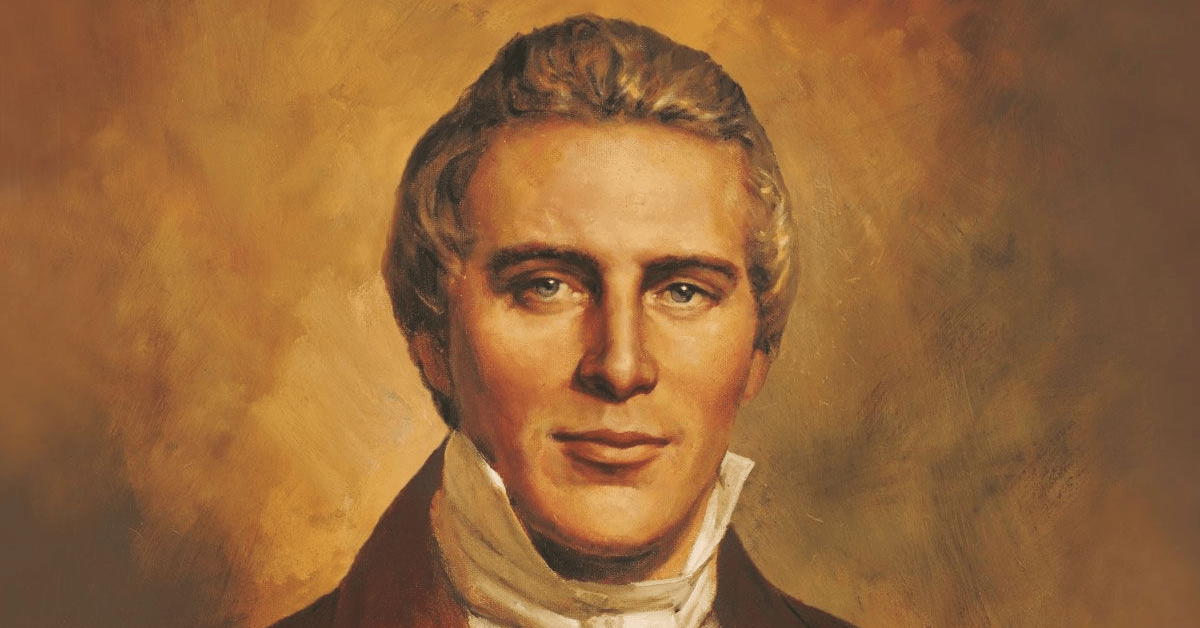
“Smith gets a commandment that he shall be the ‘head of the Church,’ or that
he ‘shall rule the Conference,’ or that the Church shall build him an elegant house
and give him1000 ($35,250) dollars. For this the members of the church must vote, or they will be cast off for rebelling against the commandments of the Lord.”
—Ezra Booth, Letter to Rev. Ira Eddy, October 3, 1831
If you haven’t read part one, I recommend beginning there before proceeding. In part two, we’ll discuss the tumultuous Kirtland-Independence period (1831-1837). Joseph’s revelations during this time were almost always prompted by contemporary issues and concerns (nothing happens in a vacuum) and it’s imperative we understand them in their historical context. A broad survey of this time period would be useful, but such a work would likely fill several volumes. So, while there’s a lot of information presented here, it’s by no means comprehensive.
As I was working on this post, the picture of how the Mormonism of the early church evolved into the Mormonism we know today came into focus. I mention it frequently, but Sidney Rigdon’s arrival in December 1830 fundamentally changed Mormonism. Understanding his background gives us good insight to how Mormonism evolved during the early Kirtland years. It’s also during this time that Joseph Smith’s economic ambitions greatly accelerated and laid the foundation for the current state of the LDS church.
I originally intended to cover the entire Missouri period in this period, but because it was getting too long, I decided to end it around 1836. We’ll get to the Kirtland Safety Society, tithing, Far West and the Nauvoo period in part three. Again, any dollar figures in parenthesis represent the approximate 2024 equivalent.
THE ORIGINS OF THE LAW OF CONSECRATION
On October 17, 1830, Oliver Cowdery, Ziba Peterson, Peter Whitmer and Parley P. Pratt were sent on a mission to the Lamanites (D&C 28:8-10). A few weeks into their mission at the behest of Parley P. Pratt, the four men travelled to Mentor, Ohio, home of Pratt’s former Baptist congregation led by Sidney Rigdon. Upon arrival, Pratt told Rigdon of Joseph Smith and the Book of Mormon. After two weeks of study, Rigdon determined the Book of Mormon to be true and was baptized on November 14. One hundred members of Rigdon’s congregation soon followed, including Isaac Morely, who built Joseph a house on his property, and Edward Partridge, who would be called as the first bishop. Over the next several years, some 3,000 Campbellites would join Joseph’s church.
After the official April 1830 organization, Rigdon’s conversion to Mormonism is likely the most significant event in church history. As I’ve mentioned, Rigdon’s arrival drastically and irrevocably altered the early church’s doctrine, structure and language. John L. Brook noted in his excellent book The Refiners Fire: The Making of Mormon Cosmology, 1644-1844, that Joseph’s early revelations contained the language of traditional Christianity: grace, atonement, justification, election. Mormonism began as a fairly traditional Christian denomination. However, “With the arrival of Rigdon late in 1830,” he writes, “there seems to be a subtle change in focus of the revelations, with the ‘mysteries’ being fleshed out with detail about priesthoods and temples, and a new language of sealing, binding, purity, and ‘fulness’ becoming more and more pronounced.” (p. 207)
David Whitmer wrote later in life that “Brother Joseph rejoiced, believing that the Lord had sent to him this great and mighty man Sydney Rigdon, to help him in the work.” Yet the arrival of the seasoned Rigdon and his doctrine was more of an imposition rather than a cooperative arrangement. Whitmer added that Joseph “drifted into many errors and gave many revelations to introduce doctrines, ordinances and offices in the church, which are in conflict with Christ’s teachings” and that “through the influence of Sydney Rigdon, Brother Joseph was led on and on into receiving revelations every year, to establish offices and doctrines which are not even mentioned in the teachings of Christ in the written word.” Indeed, it was Rigdon who introduced two orders of priesthood to the church, neither of which were mentioned in the 1830 Articles and Covenants. According to Whitmer, it was Rigdon who persuaded Joseph Smith that high priests belonged in the church, which necessitated revising a number of existing revelations. It was Rigdon who identified ‘Adam’ as the Archangel Michael. It was Rigdon who wrote the Lectures on Faith. The first mention of a temple in the revelations is found in D&C 36:8, a revelation given to Edward Partridge a few days after he and Rigdon met Joseph. Perhaps most importantly, with Rigdon in the fold, the idea of reclaiming the Lamanites, to whom the Book of Mormon is primarily written, became an afterthought and remains so to this day. ‘Restoration’ of Apostolic Christianity was the name of this new game.
Prior to joining Joseph’s movement, Rigdon, like his mentor Alexander Campbell, was deeply involved with the Restoration Movement of the Second Great Awakening (1790-1840). The Restoration Movement, also called the Stone-Campbell Movement (Barton Stone and his ‘Christians’ and Thomas Campbell and his ‘Disciples of Christ’) sought to restore a primitive, idealized Christianity, or “the ancient order of things.” (This phrase pre-dates Mormonism by many, many decades.) Both Stone and Campell believed that denominational and creedal Christianity were hindrances to the church and that all branches should join under one banner. Some have argued that the “Restoration Movement” was, in fact, a unity movement.
In the spring of 1821, Rigdon read a pamphlet by Alexander Campbell, Thomas’ son, and travelled to meet him. F. Mark McKiernan writes of that initial meeting,
“The conversation was lengthy. Campbell commented, ‘After tea in the evening, we commenced and prolonged our discourse till the next morning.’ Rigdon’s conversation with Campbell marked a turning point in his life and he became a biblical literalist. (Richard Bushman once noted that Joseph Smith was a biblical “hyperlisteralist.”) According to Campbell, ‘On parting the next day, Sidney Rigdon, with all apparent candor, said, if he had within the last year taught and promulgated from the pulpit one error, he had a thousand.’ Campbell happily accepted both Rigdon and Bentley as converts to his cause of reformation, but he worried about Rigdon’s compulsive nature: ‘Fearing they might undo their influence with the people, I felt constrained to restrain rather than to urge them on in the work.’ Rigdon adopted Campbell’s goal of the restoration of the ‘ancient order of things’ as his own.” (Emphasis added.)
In February 1822, upon a recommendation from Campell, Rigdon accepted a position as pastorate of the First Baptist Church in Pittsburgh where he preached Campbell’s brand of restorationism. There were, however, two issues on which Rigdon differed with Campbell. Firstly, Campell was a cessationist, meaning he believed the gifts of the spirit (speaking in tongues, healing, etc.) necessarily ended with the deaths of the original twelve apostles. Campbell even wrote that Rigdon “sought to convince influential persons that, along with the primitive gospel, supernatural gifts and miracles ought to be restored.” (I imagine Rigdon’s heart sang when he read Moroni 10:8-18.) Secondly, was the belief in a system of shared property. McKiernan writes that Rigdon,
“…wanted to incorporate into Campbell’s restoration every belief or practice which was a part of the New Testament church. He also differed from Campbell over the issue of a communal society. Rigdon wanted to establish a community in which all property was held in common, which he believed to be the practice of the early Jerusalem church. (Acts 2:44-45). Campbell wanted no economic experiments which involved communal life within his religious sect.”
In 1826 Rigdon relocated to Mentor, Ohio to lead a more liberal Baptist church. One of Rigdon’s congregants was Isaac Morely, who led a Utopian group called “The Family” or “The Morely Family.” (Utopian communities were common during this time.) When the Mormons arrived in late 1830, the Rigdon group was practicing a communal property system called “common stock.” However, as is often the case with such systems, there were those who abused it. John Whitmer observed,
“The disciples [of Christ in Ohio] had all things common, and were going to destruction very fast as to temporal things; for they considered from reading the scripture that what belonged to a brother, belonged to any of the brethren. Therefore they would take each other’s clothes and other property and use it without leave which brought on confusion and disappointments, for they did not understand the scripture.” (Emphasis added.)
In December 1830, shortly after Rigdon’s conversion, he and Edward Partridge travelled to Lafayette, New York to meet Joseph Smith. In the days following, Joseph produced three very important revelations (D&C 35-37). The first (35) declares that Sidney Rigdon “was sent forth, even as , to prepare the way before me, and before which should come” and instructs him to serve as scribe for Joseph who was then working on his revision of the Bible. The second (36), was given to Edward Partridge and is the first to mention a temple. Sometime during their introductory meetings, Rigdon and Partridge invited Joseph to relocate the church to Kirtland. Joseph, perhaps unsurprisingly, produced the third revelation (37) instructing the Saints relocate to Kirtland to escape “the enemy.” (Steven C. Harper writes that this enemy was “unspecified.”) Then on January 2, 1831, a new revelation informed that Saints that the Lord would give them His law and they would be endowed with power from on high. (D&C 38:32). This all happens within two or three weeks of Rigdon’s arrival. The “law” is the “Law of Consecration” found in D&C 42, which we’ll get to below. Before Joseph left for Kirtland, he laid the foundation of this system, writing that,
“And now, I [the Lord] give unto the church in these parts a commandment, that certain men among them shall be appointed, and they shall be appointed by the voice of the church; And they shall look to the poor and the needy, and administer to their relief that they shall not suffer; and send them forth to the place which I have commanded them; And this shall be their work, to govern the affairs of the property of this church. And they that have farms that cannot be sold, let them be left or rented as seemeth them good. See that all things are preserved; and when men are endowed with power from on high and sent forth, all these things shall be gathered unto the bosom of the church.” (D&C 38:34-38. Emphasis added.)
The announcement of a new law is a strange and interesting development. In a June 1829 revelation, Joseph, Oliver Cowdery and David Whitmer were given a commandment “that [they] rely upon the things which are written (in the Book of Mormon); for in them are all things written, concerning my church, my gospel, and my rock.” (Book of Commandments Ch. XV). Does “all things” mean “all things,” or does it mean something else? The church already had an existing governing document called The Articles and Covenants of the Church of Christ that doesn’t mention any future law or economic system. How did Joseph get around it? You know the answer by now: rewrite the revelation. When republished in the Doctrine and Covenants, the revelation was changed to read they were to “rely upon the things which are written; for in them are all things written concerning the foundation of my church, my gospel and my rock.” This revised version presents the Book of Mormon as something to build on rather than complete. The revision gave Joseph and Sidney carte blanche to add whatever doctrines, offices and systems they saw fit. This continues today as President Nelson rather infamously said, “If you think the Church has been fully restored, you’re just seeing the beginning… eat your vitamin pills. Get your rest. It’s going to be exciting.” We’ll see.
I don’t think it’s coincidental that the Law of Consecration was revealed a few days after Sidney Rigdon, who believed in a communal property and sought after “influential persons,” met Joseph Smith. To be fair, there are some differences between the “common stock” (communal) and the Law of Consecration (stewardship), which we’ll address. But it seems to me that the union of Smith’s nascent Church of Christ and Rigdon’s established Disciples of Christ was mutually beneficial for both men. Joseph suddenly had sorely needed material resources (wealthy landowners) and Rigdon had not just the “influential person” he sought, but a prophet he could leverage to institute “the ancient order of things.”
THE LAW OF CONSECRATION
On February 4, 1831, Joseph and Emma arrived Kirtland. That same day Joseph produced a revelation mandating the church build him a house. Five days later Edward Partridge was called as the first bishop of the Church, a familiar office in Rigdon’s Baptist tradition but new to Mormonism, in a revelation officially introducing the Law of Consecration. The original revelation reads in part,
“If thou lovest me, thou shalt serve me and keep all my commandments; and behold, thou shalt consecrate all thy properties, that which thou hast unto me, with a covenant and a deed which can not be broken; and they shall be laid before the bishop of my church, and two of the elders, such as he shall appoint and set apart for that purpose. And it shall come to pass, that the bishop of my church, after that he has received the properties of my church, that it can not be taken from the church, he shall appoint every man a steward over his own property, or that which he has received, inasmuch as is sufficient for his family. And the residue shall be kept to administer to him who has not, that every man may receive according as he stands in need: And the residue shall be kept in my storehouse, to administer to the poor and needy, as shall be appointed by the elders of the church and the bishop; and for the purpose of purchasing lands, and building up of the New Jerusalem, which is hereafter to be revealed; that my covenant people may be gathered in one, in the day I shall come to my temple. And this I do for the salvation of my people. And it shall come to pass, that he that sinneth and repenteth not shall be cast out, and shall not receive again that which he has consecrated unto me: For it shall come to pass, that which I spake by the mouths of my prophets shall be fulfilled; for I will consecrate the riches of the Gentiles, unto my people which are of the house of Israel…” (Book of Commandments, Ch. 47)
The Law of Consecration had a two-fold purpose: to provide for the poor and to purchase land for the New Jerusalem, later revealed to be Independence, Missouri, where Jesus would appear at His second coming. (It’s now been over 190 years since this was supposed to happen). I don’t think any reasonable person has an issue with assisting the less fortunate. It’s one of Christianity’s central tenets, and just part of being a decent human being. The second part of the Law of Consecration, which Richard Bushman called “a radical new economic order” (Rough Stone Rolling, p. 154), is more troubling. Rigdon’s congregation, almost all of whom Joseph had just met, were required to deed “all their property” (later revised to “of their property” in the D&C) to their new church, thereby forfeiting any legal claim on their land. Bishop Partridge would then grant a person a stewardship of his own property, but only enough of it to ensure he met his family’s needs. Fortunately, Partridge had to agree with the landowner as to what qualified as “needs.” I’m not familiar with 1830s laws, but I can’t fathom a reason Joseph’s humanitarian and city-building endeavors required the deeds to church members’ properties. If anyone knows, please leave a comment.
As someone who pays very close attention to words, I find explanations of the Law of Consecration interesting. The church’s website claims that “Church members voluntarily consecrated their possessions to the Church by legal deed.” If you read the revelation, it’s not voluntary. “Thou shalt” implies a “promise, command or determination.” If it were truly voluntary, there would be no penalty for noncompliance and the revelation would read something along the lines of “those who desire may consecrate their land via legal deed.” Steven C. Harper writes that while the Saints had stewardship over their land, the Lord “required that the Saints freely offer their surplus to His storehouse to be used to relieve poverty and build Zion (Independence).” “Require” and “freely offer” are mutually exclusive terms, with the former meaning to “demand; impose obligation.” How does the Lord “require” that the Saints “freely offer” their surplus? “Require” is at best a mandate, at worst a threat. I can’t hold someone at gunpoint and require they freely give me their wallet. Naturally, some people would resist such a mandate, as they should, especially coming from an unknown prophet. Harper continues, “Some rebellious Saints even challenged the law in court, leading to refinements in its language and changes in practice.” I have long wondered why revelations from God are subject to refinements and changes. Harper’s explanation is fairly typical of the language I see LDS historians and academics use in attempt to smooth out the wrinkles in uncomfortable doctrines and historical issues. On the other hand, if you’re Joseph Smith and Sidney Rigdon, you just change the revelations and their practices to account for current circumstances. One important sentence from the original revelation, which will figure prominently going forward, was deleted entirely: “Thou shalt contract no debts with the world, except thou art commanded.” Joseph and Sidney were so heavily in debt when the D&C was published that perhaps this portion was deleted to spare them the embarrassment of neglecting “God’s” commandments.
We also need to question the validity of this revelation because the Latter-Day Saints aren’t the House of Israel. They were and are Gentiles. The “Gentiles” mentioned in the Law of Consecration, however, appear to be non-Mormons or former Mormons. (“Consecrating the riches of the Gentiles” sounds more like theft.) That should be our first clue that this likely isn’t a revelation from God. Our second is that this revelation, like many others, underwent significant “refinements” when it was republished in the Doctrine and Covenants. (Click here for a partial side-by-side comparison of the 1833 and 1835 versions.) One of the most significant changes provides for additional acquisition and use of property. The additions are highlighted in bold text,
“And again, if there shall be properties in the hands of the church, or any individuals of it, more than is necessary for their support, after this first consecration, which is a residue, to be consecrated unto the bishop, it shall be kept to administer to those who have not, from time to time, that every man who has need may be amply supplied, and receive according to his wants. Therefore, the residue shall be kept in my store house, to administer to the poor and the needy, as shall be appointed by the high council (which did not exist in 1831) of the church, and the bishop and his council, and for the purpose of purchasing lands for the public benefit of the church, and building houses of worship, and building up of the New Jerusalem which is hereafter to be revealed, that my covenant people may be gathered in one in that day when I shall come to my temple. And this I do for the salvation of my people.”
I recently saw a fairly well-known post-LDS individual (whom I obviously won’t name) claim on Facebook that it never occurred to the church to own property until the late 1800s, lamenting that “everything really started going downhill once the leaders felt it was necessary that the ‘Church’ own property.” Yet the Law of Consecration calls for putting property in the hands of the church, buying property for the benefit of the church, and buying land in Missouri for the New Jerusalem. If anyone has an issue with the church’s vast land holdings or its $100 billion portfolio, blame Joseph Smith.
One last observation on the Law of Consecration. Here, I believe, is when Joseph Smith began to present himself as a modern-day Moses. In scriptural language, “thee,” “thine” and “thou” are always singular. “Ye” and “you” are always plural. According to the Exodus account, Moses received the Decalogue with the singular “thou”: “thou shalt not kill,” “thou shalt not commit adultery,” etc. Moses, I assume, was the singular recipient of the Law on behalf of the Israelites as covenant mediator. The Law of Consecration appears to function the same way: “thou shalt consecrate all thy properties…” Later, D&C 103:16 and 21 compares Joseph Smith to Moses. D&C 5 was also revised to reflect Joseph assuming the role as Mosaic mediator. The original revelation reads, “But this generation shall have my words, yea and the testimony of three of my servants shall go forth with my words unto this generation.” The revised version reads,
“…but this generation shall have my word through you; in addition to your testimony the testimony of three of my servants, whom I shall call and ordain, unto whom I will show these things: and they shall go forth with my words that are given through you.”
Recall that William Law wrote in The Nauvoo Expositor “that we will not acknowledge any man as king or law-giver to the church; for Christ is our only king and law-giver.” He was right then, and he would be right today. This may have been Joseph Smith’s first step on the path to dictatorship. By Nauvoo he had total control of the Saints as prophet, seer and revelator (God’s mouthpiece); president of the church (ecclesiastical); president of the high priesthood (power of God); mayor of Nauvoo (civic); general of the Nauvoo Legion (military); Trustee-in-Trust of the church (financial); chief judge and magistrate (judicial); and presidential candidate. If this were any other man, we would rightly call him a tyrant.
At any rate, the move to Kirtland seemed to awaken an entrepreneurial spirit in Joseph. I think he was likely impressed by the successful businessmen now in his flock and saw an opportunity to improve his financial prospects. Recall, however, that seven months earlier a revelation informed him that “in temporal labors thou shalt not have strength, for this is not thy calling” (D&C 24:9). I don’t know if that was an authentic revelation or not, but Joseph disregarded this particular commandment. Max Parkin writes,
“While Latter-day Saints may not typically think of Joseph Smith as an energetic businessman or an assertive entrepreneur, multiple business interests captured his attention beginning shortly after the Church was organized. By February 1831 in Kirtland, Ohio, he began to inquire about economic matters, and by July, the twenty-five-year-old Joseph Smith embarked on a path of land acquisition, community planning, and other commercial ventures. He operated his businesses under the principles of consecration and stewardship and coordinated his enterprises through a business management company he named the United Firm.” (Emphasis added)
It wasn’t the first time and wouldn’t be the last that Joseph didn’t abide by his revelations. It’s a very strange thing. What I have long suspected is that by this time the distinction between Joseph’s ideas and revelations from God were blurred (assuming they were ever separate) as he had developed a habit of making declarations “in the name of the Lord” when the Lord wasn’t involved. Ezra Booth, who left the Saints after the initial trip to Independence, wrote to the Reverend Ira Eddy in 1831 that when Joseph “speaks by the Spirit, or says he knows a thing by the communication of the Spirit, it is received as coming directly from the mouth of the Lord.” This gave him virtually unlimited power and influence to advance his own interests. Need something? Declare it in the name of the Lord. For example, an unpublished revelation from May 1831 gave Joseph Sr. and Lucy Mack Smith the rights to Frederick G. Williams 144-acre farm for their material support: “Let mine aged servant Joseph govern the things of the farm…inasmuch as he standeth in need.” The Smith family’s agricultural and economic difficulties are well-documented, so I don’t blame Joseph for wanting to give his father fertile land. There are, however, better ways to do it that don’t invoke the name of God. But Joseph wasn’t done with Williams’ farm. Parkin continues,
“On January 5, 1833, a different use of the Williams farm than farming would come to light, however, when a revelation directed Frederick G. Williams to give up his farm. ‘Let thy farm be consecrated for bringing forth the revelations,’ it stated. Joseph Smith apparently hoped that the cost of publishing the scriptures (the Book of Commandments) in Missouri could be covered by the sale of lots from the Williams farm, which he integrated into the United Firm. Furthermore, five months later, on June 5, 1833, Church leaders broke ground for the construction of the Kirtland Temple on a lot on the southeast edge of the adjacent Peter French farm, which the United Firm had just acquired. This was an early step in the much larger vision of Kirtland municipal planning, in which both the Williams farm and the French farm would play a major role, as Joseph Smith and other officers of the United Firm began to lay the foundation for an expanded Latter-day Saint Kirtland.” (Emphasis added.)
While Joseph expanded his business interests and city planning in Kirtland, the New Jerusalem remained at the forefront of his mind. Surplus from Kirtland was to be used to purchase land for this Holy City. On June 6, 1831, Joseph produced D&C 52, which instructed him and Sidney Rigdon to “journey to the land of And inasmuch as they are faithful unto me, it shall be made known unto them what they shall do; And it shall also, inasmuch as they are faithful, be made unto them the of your inheritance.” (v. 3-5)
ZION
I think the idea of Zion is misunderstood by some people, especially those in various schismatic movements on the Mormon periphery. Whenever Joseph mentions Zion, or the revelations reference Zion, it refers to Independence and nowhere else. Not Kirtland, not Nauvoo, and certainly not Utah or the Rocky Mountains. By the Nauvoo period, Zion would necessarily be redefined to encompass all of America, but between 1831-1837 it refers to Independence. (In 1838 Far West, MO would be considered Zion as well.) It’s not a prophecy for our day and Joseph Smith won’t be rising from the grave to lead a return. We have to couch Zion in its time and place. Steven L. Olsen writes,
“The founding of this millennial urban society was so important for the early Church that thousands of converts from several different countries sacrificed their homes, careers, families, native lands, comfort, health, and even their lives to realize Joseph Smith’s vision of an earthly kingdom that was, like Enoch’s primordial City of Zion, worthy to become God’s ‘abode forever’ (Moses 7:21). So determined was this modern prophet to replicate on earth the spatial and social orders of heaven that when persecution and dissension began to frustrate Zion’s gathering, he exclaimed, ‘Unless Zion is built our hopes perish, our expectations fail, our prospects are blasted, our salvation withers, and God will come and smite the whole earth with a curse.’ (HC 2:517).” (Emphasis added.)
According to Ezra Booth, Sidney Rigdon said, “The Lord has set us our stint; no matter how soon we perform it—for when this is done, he will make his second appearance.” Zion, however, failed. The temple was never built. The Saints left. Has our salvation withered? Did God come and smite the whole earth with a curse? These are important questions when evaluating Joseph’s prophetic track record. Anyway, I think most people agree with Olsen that Zion was to be God’s abode. Joseph said as much, too. It was that, but it wasn’t just that. Zion was to be the only safe place on earth when the horrors immediately preceding Christ’s second coming wiped the wicked off the face of the earth, which makes Joseph’s attempts to build up Kirtland all the more perplexing. To that end, in the summer of 1831, Joseph Smith and Sidney Rigdon, along with 13 pairs of elders, including the companionship of Isaac Morely and Ezra Booth, departed to Missouri. Booth wrote to Reverand Eddy,
“A commandment was received, and Elders were directed to take their journey for the ‘promised land.’ They were commanded to go two by two, with the exception of Smith, Rigdon, Harris, and Partridge; and it was designed that these should find an easier method of transporting themselves, than to travel that distance on foot. They were careful to make suitable provision for themselves, both in money and other articles, that while on their journey, they might carry the appearance of gentlemen filling some important stations in life: while many, who were destined to travel on foot with packs upon their backs, were so fired with the ardor of enthusiasm, that they supposed they could travel to Missouri, with but little or no money.” (Emphasis added.)
Apparently, Joseph had prophesied that a great congregation of Saints would be waiting for them in Missouri. However, when they arrived, they found Oliver Cowdery and a handful of female converts. “We discovered that prophecy and visions had failed, or rather had proved false,” Booth wrote. “This fact was so notorious, and the evidence so clear that no one could mistake it —so much so, that Mr. Rigdon himself said that ‘Joseph’s vision was a bad thing.'” Unphased by the paltry harvest of souls, Zion was revealed on July 20, 1831,
“Wherefore, this is the , and the for the city of . And thus saith the Lord your God, if you will receive wisdom here is wisdom. Behold, the place which is now called Independence is the place; and a spot for the is lying westward, upon a lot which is not far from the courthouse. Wherefore, it is wisdom that the land should be by the saints, and also every tract lying westward, even unto the line running directly
With Zion identified and dedicated, the church began buying lands. Under the direction of Bishop Partridge, the years of 1831-1833 saw the acquisition 180 acres in Independence and 1,200 acres throughout of Jackson County. Partridge, W.W. Phelps (printer) Sidney Gilbert (financial agent) and Oliver Cowdery (assistant printer and editor) were left to manage Zion after Joseph and Sidney returned to Kirtland. Gilbert established a Church storehouse, financed by Whitney. Proceeds from the store were used to buy and develop more land. Phelps began publishing The Evening and the Morning Star and work began on the Book of Commandments and a hymnal. Future revelations would repeatedly stress the importance of publishing the Book of Commandments. I’ve thought about this a lot over the years, and I don’t know how Joseph Smith believed he was going to establish a theodemocracy in a state that had been admitted to the Union ten years earlier and not face any sort of resistance. Then again, he didn’t believe there would be a Union that much longer. Jesus was coming and He was coming soon.
After the Missouri trip, Ezra Booth penned a series of letters to the Reverand Ira Eddy which were published in the Ohio Star in the fall of 1831. They offer very interesting insights into the church’s early years. I recommend reading them. His observations and conclusions supported many of my own. He also addressed a letter directly to Bishop Partridge,
“The method by which Joseph and Co. designed to proceed home (from Missouri), it was discovered, would be very expensive. ‘The Lord don’t care how much money it takes to get us home,’ said Sidney. Not satisfied with the money they received from you, they used their best endeavors to exact money from others, who had but little, compared with what they had; telling them in substance, ‘you can beg your passage, on foot, but as we are to travel in the stage, we must have money.’ You will find, sir, that the expense of these three men, was one hundred dollars ($3,500) more than three of our company expended, while on our journey home; and for the sake of truth and honesty, let these men never again open their mouths, to insult the common-sense of mankind, by contending for equality, and the community of goods in society, until there is a thorough alteration in their method of proceeding. It seems, however, they had drained their pockets, when they arrived at Cincinnati, for they were there under the necessity of pawning their trunk, in order to continue their journey home. Here they violated the commandment, by not preaching; and when an inquiry was made respecting the cause of that neglect, at one time they said, they could get no house to preach in; at another time they stated, that they could have had the courthouse, had they staid a day or two longer, but the Lord made it known to them, that they should go on; and other similar excuses, involving like contradictions. Thus they turn and twist the commandments, to suit their whims, and they violate them when they please with perfect impunity. They can at any time obtain a commandment suited to their desires, and as their desires fluctuate and become reversed, they get a new one to supersede the other, and hence the contradictions which abound in this species of revelation.” (Emphasis added.)
I think I’ve demonstrated in these last two posts that it’s a matter of historical fact that Joseph’s revelations were frequently changed to suit circumstances and that Joseph frequently ignored or altered written commandments. There’s no reason to doubt Booth’s observations. Hostile witnesses are not always false witnesses. David Whitmer likewise noted that “Brother Joseph would listen to the persuasions of men, and inquire of the Lord concerning the different things, and the revelations would come just as they desired and thought in their hearts.” Booth ends his letter to Partridge advising him to “transfer the lands you hold in your hands, to the persons whose money paid for it. Place yourself from under the influence of the men who have deceived you; burst the bands of delusion; and fly for your life, fly from the habitations haunted by impostors.” That would have been the wise course of action, but Partridge, despite various revelatory threats against him, particularly the arrival of “one mighty and strong” to replace him after being struck dead (D&C 85:7-8), remained in the church. Partridge passed in 1840 at the age of 47 having spent most of his wealth supporting Mormonism. His daughters Emily and Eliza were allegedly two of Joseph’s wives. His daughters Caroline, Eliza and Lydia all became wives of Amasa Lyman. Emily became one of Brigham Young’s wives in 1844. She was 20 years old at the time. Brigham Young was 43.
THE BOOK OF COMMANDMENTS
During a series of church conferences in early November 1831, Joseph’s revelations were voted “worth to the Church the riches of the whole Earth.” Joseph’s history refers to his revelations as “the foundation of the Church in these last days, and a benefit to the world, showing that the keys of the mysteries of the kingdom of our Savior are again entrusted to man.” (The Book of Mormon has never been the foundation of church.) After the final conference on November 12, a new revelation appointed Joseph, Martin Harris, Oliver Cowdery, John Whitmer, Sidney Rigdon and W.W. Phelps stewards over “the revelations and commandments,”
“Wherefore, I have appointed unto them, and this is their business in the church of God, to manage them and the concerns thereof, yea, the profits thereof. Wherefore, a commandment I give unto them, that they shall not give these things unto the church, neither unto the world; Nevertheless, inasmuch as they receive more than is needful for their necessities and their wants, it shall be given into my storehouse. And the profits thereof shall be consecrated unto the inhabitants of Zion, and unto their generations, inasmuch as they become heirs according to the laws of the kingdom.” (D&C 70:5-8. Emphasis added. The revelation was changed from “the profits thereof” to “the benefit thereof” for publication in 1835.)
Translation: these men were to monetarily benefit from the sale of the Book of Commandments, but apparently financing was still an issue. A December 1832 revelation states,
“And again, verily, verily, I say unto you, it is expedient that every man who goes forth to proclaim mine everlasting gospel, that inasmuch as they have families, and receive money by gift, that they should send it unto them or make use of it for their benefit, as the Lord shall direct them, for thus it seemeth me good. And let all those who have not families, who receive money, send it up unto the bishop in Zion, or unto the bishop in Ohio, that it may be consecrated for the bringing forth of the revelations and the printing thereof, and for establishing Zion.” (D&C 84:103-104. Emphasis added.)
If you were a single man without a family and someone gave you money, you had to give it to Bishop Partridge. As mentioned, Joseph also “integrated” Frederick G. Williams’ farm in 1833 in order to pay for the publication of his revelations. Here’s my question: why was in necessary to publish the Book of Commandments in the first place, other than for financial gain? Joseph could have made two copies, one for Kirtland and one for Independence, kept them in a public building and made them available to anyone who wanted to read them. Given that the attempts to profit from the publication of the Book of Mormon were frustrated again and again, is it unreasonable to suggest that perhaps there was a little divine intervention in destroying the Missouri press so Joseph couldn’t profit from it? Every one of Joseph’s attempts to profit off the church failed. Maybe it’s not all accidental. Recall that as Moroni surveyed the carnage in the aftermath of Cumorah, he wrote, “behold it is the hand of the Lord which hath done it.” (Mormon 8:8) It was Nephites disobedience and wickedness that left their destruction. A July 1828 revelation cautioned Joseph,
“And behold, how oft you have transgressed the commandments and the laws of God, and have gone on in the persuasions of men. For, behold, you should not have feared man more than God. Although men set at naught the counsels of God, and despise his words—Yet you should have been faithful; and he would have extended his arm and supported you against all the fiery darts of the adversary; and he would have been with you in every time of trouble.Behold, thou art Joseph, and thou wast chosen to do the work of the Lord, but because of transgression, if thou art not aware thou wilt fall.” (D&C 3:6-9)
We have to entertain the idea that Joseph did, in fact, fall.
THE UNITED FIRM
On March 1, 1832, a new revelation officially introduced the United Firm,
“For verily I say unto you, the time has come, and is now at hand; and behold, and lo, it must needs be that there be an organization of my people, in regulating and establishing the affairs of the organization of the Literary and Merchantile establishments, both in this place and in the land of Zion—For a permanent and everlasting establishment and order unto my church, to advance the cause, which ye have espoused, to the salvation of man, and to the glory of your Father who is in heaven.” (D&C 78:2-3. Emphasis added)
The United Firm joined the storehouse and printing establishment under one umbrella. It’s also one of the most confusing and difficult aspects of church history to sort out. I originally planned to publish this post about a week ago, but I’ve spent the last five days just trying to make sense of all the moving parts: revelations, land acquisitions, changing personnel, and restructuring during its two-year existence. This organization was undoubtedly an economic enterprise, as indicated by the original name. However, when published in the D&C, “Literary and Merchantile establishments” was swapped for “ for the of my people.” Why the change? The United Firm, as we’ll see, was a major failure and anything but “permanent and everlasting.”
In April 1832, Joseph and Sidney returned to Independence and read this revelation (D&C 78) to a group of high priests. While there, another revelation further clarified the role of those involved with the United Firm,
“Therefore, verily I say unto you, that it is expedient for my servants Edward Partridge and Newel K. Whitney, A. Sidney Gilbert and Sidney Rigdon, and my servant Joseph Smith, and John Whitmer and Oliver Cowdery, and W. W. Phelps and Martin Harris to be bound together by a bond and covenant that cannot be broken by transgression, except judgment shall immediately follow, in your several stewardships—To manage the affairs of the poor, and all things pertaining to the bishopric both in the land of Zion and in the land of Kirtland…And you are to be equal, or in other words, you are to have equal claims on the properties, for the benefit of managing the concerns of your stewardships, every man according to his wants and his needs, inasmuch as his wants are just…And all this for the benefit of the church of the living God, that every man may improve upon his talent, that every man may gain other talents, yea, even an hundred fold, to be cast into the Lord’s storehouse, to become the common property of the whole church…(D&C 82, April 26, 1832.)
Joseph Smith didn’t have any capital or resources at this time. This revelation, however, permits him to have equal claim on the properties acquired through Whitney’s wealth and connections. LDS historian Matthew Godfrey writes,
“The council met again the next day and directed that the two main branches of the firm be Gilbert, Whitney & Co. (the mercantile partnership of Newel K. Whitney and Sidney Gilbert in Independence) and N. K. Whitney & Co. (Whitney’s Kirtland firm). They also appointed Phelps and Gilbert to draft the bond that the members of the firm needed to enter as instructed by the revelation. Just a few days later, around May 1, 1832, the United Firm held its first regular meeting, with all of its members in attendance except Martin Harris. At this meeting, Whitney and Gilbert were ‘appointed agents to act in the name of this Firm’ and the firm was directed to secure a loan of $15,000 ($535,000) through N. K. Whitney & Co.”
Newell Whitney financed the United Firm. The editors of the Joseph Smith papers add that, “In addition to mercantile and publishing enterprises, officers of the United Firm supervised farms and residential real estate, an ashery, a tannery, a stone quarry, a sawmill, and a brick kiln. Each property or enterprise under United Firm supervision was owned by individuals, rather than by the firm or by its officers as a group.”
A December 1832 revelation instructed the Saints to “establish a , even a house of prayer, a house of fasting, a house of faith, a house of learning, a house of glory, a house of order, a house of God.” (D&C 88:119). In June 1833 the Firm acquired the Peter French farm. Parkin writes that Peter Coe, who wasn’t a member of the United Firm,
“…paid Peter French $2,000 ($73,000) down on his 103-acre farm located on the flats of the Chagrin River and southward up the hill to the Williams farm. The farm also included French’s dwelling house and inn. Coe purchased the farm in April 1833 for a total price of $5,000 ($182,5000) with a mortgage contract to pay the remaining balance of $3,000 ($109,500) in two equal payments in April 1834 and 1835. But on June 4, a revelation directed Bishop Whitney to ‘take charge’ of the farm, and within a few days N. K. Whitney and Company, serving as a holding agent for the United Firm, acquired the farm (and its debt) from Coe and managed it. Together, the Williams and French farms composed most of the west half of the proposed new Latter-day Saint city of Kirtland. Lots were to be surveyed and sold to the Saints ‘to benefit the firm for the purpose of bringing forth’ the scriptures being published in Missouri…(See D&C 96:2-5)
“In March and June 1833, Frederick G. Williams and John Johnson, respectively, were added as officers in the United Firm. Williams entered the firm that spring as he replaced Jesse Gause in the Church Presidency and possibly as a reward for the consecration of his farm. Johnson entered possibly because of his many acts of service to Joseph Smith at Hiram and because of the hope that the firm would receive funds from the sale of his farm in Portage County, Ohio.” (Emphasis added.)
Does the addition of Johnson to the United Firm constitute pay-for-play? Perhaps. Despite the additions of Johnson and Williams, debt continued to mount.
“…in February 1834, the Prophet received a revelation to go east with others to raise recruits and funds for Zion’s Camp to help the Saints in Missouri. Joseph decided to use the trip also for raising money to pay on the Kirtland debt. Joseph Smith and Parley P. Pratt, his companion, left Kirtland on February 26, as did Orson Hyde and Orson Pratt and other traveling pairs. Three weeks later, at a conference of elders in Livingston County, New York, Joseph reviewed his Kirtland financial concerns: ‘Two Thousand Dollars ($71,300)…will deliver Kirtland from Debt for the present,’ he told the audience. In response, the conference appointed five elders to raise the funds. The next few weeks, however, saw them raising but little money. On April 7, after he returned to Kirtland and while lamenting the poor collection, Joseph wrote to Hyde: ‘If this Church…will not help us, when they can do it without sacrifice… God shall take away their talent.’ On that same day, Joseph met with Whitney, Cowdery, and Williams and prayed that the Lord would ‘deliver the firm from debt.’ On April 10, while pondering their difficulty, Joseph discussed the problem with the officers of the ‘united firm . . . [and] agreed that the firm should be desolv[ed].’ He wrote, ‘Each one [is to] have their stewardship set off to them.’ (Emphasis added.)
How did Joseph Smith know if the New York church could donate funds without sacrifice? Why should they be on the hook for his and the Firm’s debts? Joseph eventually found a way to seize funds from the members in the form of “tithing,” which we’ll get to in the next post. I have no way of knowing if the New York Saints had their “talent” taken away, but given Joseph’s track record of pronouncing woes, curses and penalties on people that never came to pass, I highly doubt it. Parkin continues,
“Besides its outside debt, the United Firm was also burdened with unpaid bills among its officers. Partners of the firm in Kirtland accrued debt as they drew from the Whitney store either as paying customers or as beneficiaries of the Lord’s storehouse. Nevertheless, Whitney kept a record of accounts receivable on members of the firm. In spring 1834, Joseph sought to have these internal debts canceled. Frederick G. Williams wrote that when the Prophet received the revelation to distribute the assets of the United Firm, he received another revelation, but one ‘not written,’ he said. It required ‘every one of which were then called the firm to give up all notes and demands that they had against each other . . . and all be equal.’ Whitney stoically wrote, ‘Joseph said it must be done.’ Whitney’s account showed that the debt owed to him by the five principal Kirtland members of the United Firm (including Joseph Smith) totaled $3,635.35 ($129,600). Compliant, Whitney accepted Joseph’s direction ‘without any value recd,’ he noted. Williams was also asked to relinquish his claim on all members of the firm, ‘which was the cause,” he wrote, ‘that I never got any thing for my farm.’
The church sums up the end of the United Firm, which was to be “permanent and everlasting,”
“…the debts had accumulated over two years as these men worked together, in an administrative body called the United Firm, to direct and finance the temporal operations of the Church (“In temporal labors thou shall not have strength.”) Now, after two tumultuous years, the United Firm was to be dissolved. ‘Joseph said it was the will of the Lord’ that the accounts be balanced ‘in full without any value rec[eived],” Whitney declared. Whitney then said that he would do what Joseph asked…
“In addition to operating his store in Kirtland as a Church storehouse, Whitney became responsible for debts owed on a large parcel of land (the Peter French farm) purchased in Kirtland where Church leaders planned to construct the house of the Lord. Through the means of his store, Whitney also provided financing and goods for the sustenance of Joseph Smith and others, generating the debts that Whitney would forgive in April 1834.”
How Newell Whitney remained in the church after 1834 is a mystery to me. I truly don’t understand. All the members of the Firm were “to have equal claims on the properties,” but when the Firm folded, Whitney assumed all the debt, not just from the properties, but from the other Firm members. In April 1834, another revelation officially dissolved the United Firm and reorganized it under a different banner. Properties and assets were distributed to individual members. The debt, however, was still an issue. We read in that revelation,
“And again, verily I say unto you, concerning your debts—behold it is my will that you shall pay all your debts. And it is my will that you shall humble yourselves before me, and obtain this blessing by your diligence and humility and the prayer of faith. And inasmuch as you are diligent and humble, and exercise the prayer of faith, behold, I will soften the hearts of those to whom you are in debt, until I shall send means unto you for your deliverance. Therefore write speedily to New York and write according to that which shall be dictated by my Spirit; and I will soften the hearts of those to whom you are in debt, that it shall be taken away out of their minds to bring affliction upon you. And inasmuch as ye are and faithful and upon my name, behold, I will give you the .” (D&C 104:78-82)
It appears the hearts of the creditors were not softened, nor that they forgot about Joseph’s debts. Was this a result of their lack of “diligence and humility?” In this same revelation, Joseph once again leans on Martin Harris for more money: “And let my servant Martin Harris devote his moneys for the proclaiming of my words (printing the Book of Commandments), according as my servant Joseph Smith, Jun., shall direct.” (v. 26). Joseph, who arrived in Kirtland penniless and so far as I know didn’t contribute any capital to the United Firm, used this revelation for his own benefit as well, granting himself a portion of the Peter French farm,
“And again, let my servant Joseph Smith, Jun., have appointed unto him the lot which is laid off for the of my house, which is forty rods long and twelve wide, and also the inheritance upon which his father now resides;” (v. 43)
A rod is 16.5 feet, so the lot was to be 660 feet long by 198 feet wide. That’s 130,680 square feet, or three acres of land that the Newell Whitney held the debt on. Despite the dissolution of the United Firm, Joseph continued to press for the publication of his revelations,
“And for this purpose I have commanded you to organize yourselves, even to print my words, the fulness of my scriptures, the revelations which I have given unto you, and which I shall, hereafter, from time to time give unto you. For the purpose of building up my church and kingdom on the earth, and to prepare my people for the time when I shall dwell with them, which is nigh at hand. And ye shall prepare for yourselves a place for a , and consecrate it unto my name.” (It’s been 190 years since this revelation was given. How soon is “nigh at hand?”) And ye shall prepare for yourselves a place for a treasury, and consecrate it unto my name. And ye shall appoint one among you to keep the treasury, and he shall be ordained unto this blessing. And there shall be a seal upon the treasury, and all the sacred things shall be delivered into the treasury; and no man among you shall call it his own, or any part of it, for it shall belong to you all with one accord. And I give it unto you from this very hour; and now see to it, that ye go to and make use of the stewardship which I have appointed unto you, exclusive of the sacred things, for the purpose of printing these sacred things as I have said. And the avails (a New England term for the proceeds of sold goods) of the sacred things shall be had in the treasury, and a seal shall be upon it; and it shall not be used or taken out of the treasury by any one, neither shall the seal be loosed which shall be placed upon it, only by the voice of the order, or by commandment. And thus shall ye preserve the avails of the sacred things in the treasury, for sacred and holy purposes. And this shall be called the sacred treasury of the Lord; and a seal shall be kept upon it that it may be holy and consecrated unto the Lord.”
This is one of the strangest revelations in the D&C. I don’t know what the seal on the treasury means, but I suspect Joseph was drawing from the imagery of the Revelation of St. John, which he does a lot,
“And I saw a strong angel proclaiming with a loud voice, Who is worthy to open the book, and to loose the seals thereof?And no man in heaven, nor in earth, neither under the earth, was able to open the book, neither to look thereon. And I wept much, because no man was found worthy to open and to read the book, neither to look thereon.And one of the elders saith unto me, Weep not: behold, the Lion of the tribe of Judah, the Root of David, hath prevailed to open the book, and to loose the seven seals thereof. (Revelation 5:2-5)
ZION’S CAMP
Three weeks after the United Firm was dissolved, Joseph again turned his attention to Missouri. Despite the fact that Zion’s Camp, also called the Camp of Israel, was ill-prepared and poorly financed, on May 4, 1834, Joseph led the Saints on a 1,000-mile trek to Independence in hopes of reclaiming their land. An earlier revelation promised the camp that “Mine shall go up before you, and also my , and in time ye shall possess the goodly land.” (D&C 103:20. February 1834).
Governor Dunklin of Missouri appears to have been sympathetic to the Mormon cause and had agreed enlist the Missouri militia to escort the Saints to Independence. When they arrived, however, Dunklin, perhaps wisely not wanting to escalate tensions, backed out and left the Saints stranded on the outskirts. Despite the promise that God would go before them, Joseph Smith is stuck. 200 men and women followed their prophet 1,000 miles in the hot and humid summer months in hopes of liberating Zion. So, what does he do? He writes a revelation absolving himself of any wrongdoing and places the blame for the camp’s failure on those same New York churches who didn’t contribute financially,
“I speak not concerning those who are appointed to lead my people, who are the elders of my church, for they are not all under this condemnation; But I speak concerning my churches abroad—there are many who will say: Where is their God? Behold, he will them in time of trouble, otherwise we will not go up unto Zion, and will keep our moneys. Therefore, in consequence of the of my people, it is expedient in me that mine elders should wait for a little season for the of Zion.” (D&C 105:7-9 Emphasis added.)
It’s truly unbelievable. Why would the Kirtland Saints be held accountable for the actions of the New York Saints? The revelation instructs the Saints to return to Kirtland, build the House of the Lord, and be endowed with power from on high before redeeming Zion. If such an endowment were necessary in the first place, why didn’t God have them receive that endowment before leaving? (“Endowed with power from on high” simply means receiving the Holy Ghost. See Luke 24:49) Zion’s Camp was another major failure. Richard Bushman’s summation of the events has essentially become Latter-Day Saint orthodoxy,
“Nothing the camp did improved the situation in Jackson County….Was Zion’s Camp a catastrophe? Perhaps, but it was not the unmitigated disaster that it appears to be. Most camp members felt more loyal to Joseph than ever, bonded by their hardships. The future leadership of the Church came from this group.” (Rough Stone Rolling, p. 247)
This sounds less like loyalty and more like Stockholm Syndrome or trauma bonding. That it was all done in the name of the Lord makes it all the more infuriating. And lest we forget, due a cholera outbreak, 14 people never returned home.
THE HOUSE OF THE FIRST PRESIDENCY AND THE KIRTLAND TEMPLE
Nine months after the revelation to build a House of the Lord, another revelation mandated two additional structures built adjacent to the temple,
“And let the first lot on the south be consecrated unto me for the building of a house for the presidency, for the work of the presidency, in obtaining revelations; and for the work of the ministry of the , in all things pertaining to the church and kingdom…And it shall be unto the Lord from the foundation thereof, according to the of the priesthood, according to the pattern which shall be given unto you hereafter. And it shall be wholly dedicated unto the Lord for the work of the …
“And again, verily I say unto you, the second lot on the south shall be dedicated unto me for the building of a house unto me, for the work of the of the , and all things whatsoever I shall command you. (D&C 94)
These buildings, both two-story, were to be 55 ft x 65 ft, or 3,575 sq. ft. That’s the size of a very large American home. Joseph’s first Kirtland revelation mandated the Saints build him a home in order to translate. Now, as part of the foundation of Kirtland, this new revelation mandated an administrative building exclusively for his use in “obtaining revelations.” Why was a separate building needed to “obtain revelations?” His first revelation, the “First Vision,” happened in a grove of trees. Another reportedly happened in his bedroom as a teen. Constructing these two buildings seems like an unnecessary expense. Despite the commandment, the House of the First Presidency and the printing shop were never constructed. (“I know that the Lord giveth no unto the children of men, save he shall a way for them that they may accomplish the thing which he commandeth them.” 1 Nephi 3:7). The Missouri troubles shifted resources away from Kirtland building projects, but I can’t help but wonder that if this were a true revelation and what God truly wanted, He would have provided a way.
I assume most people reading this are more or less familiar with the history of the Kirtland Temple. So, we’ll keep this part brief. Dean A. Dudley writes,
“The largest single undertaking of the Mormons was the building of the temple. The temple was the center of both religious and economic activity. It was reported to have cost up to $70,000 ($2.5 million), but $40,000 ($1.4 million) is the most frequently reported figure. It was financed by consecrations from the wealthy as well as contributions in kind from workmen. But these sources were not sufficient to pay for the three-year (1833-1836) construction. In 1835 the church leaders opened several stores through the use of trade credit. Much of the inventory of those stories was used to pay the temple workmen. In addition, the temple had a direct encumbrance of $13,000 ($468,000) upon it almost from the beginning. (Bank Born of Revelation: The Kirtland Safety Society Anti-Banking Company, Journal of Economic History, Vol. 30, No. 4, pp. 848-853. Emphasis added.)
MORE ADVENTURES IN TEMPORAL PURSUITS
In late 1834, the recently relocated W.W. Phelps began work on the Doctrine and Covenants. Before learning that the Missouri press had been destroyed, Oliver Cowdery had purchased press for $190 ($6,800) and type for $360 ($12,900), for a total of $550 (almost ($20,000) for Kirtland. The Kirtland High Council originally mandated this new volume contain passages from the Bible, the Book of Mormon and Joseph’s revelations. Sometime during the editing process, the Bible and Book of Mormon were excluded from the final product. Many of Joseph’s revelations had already been copied into “revelation books” and printed in the local newspaper, so there was no reason to publish them in book form and incur this new debt. Nevertheless, David Whitmer and Samuel Smith were appointed as agents to sell copies of the D&C for $1. However, during the printing process money once again became an issue, perhaps because financiers backed out. On June 15, 1835, Joseph wrote a letter to unknown recipients soliciting donations,
“We are now commencing to prepare and print the New Translation (of the Bible), together with all the revelations which God has been pleased to give us in these last days, and as we are in want of funds to go on with so great and glorious a work, brethren <we> want you should donate and loan us all the means or money you can that we may be enable[d] to accomplish the work as a great means towards the salvation of Men.” (Emphasis added.)
With respect to Joseph, there’s no doctrine found in his revelations that has any bearing or influence on one’s salvation. Salvation only comes through faith in Christ. The Kirtland High Council originally approved an initial print run of 10,000 copies (!), later reduced to 3,000. However,
“No definite information about the total size of the 1835 printing is extant, but in the first two months after the volume was available, just over eighty copies were sold by F. G. Williams & Co. The F. G. Williams & Co. account book ends in early November 1835, and no other records have been located that provide a clearer picture of total sales. In April 1836, at least five hundred unbound copies remained unsold. Any volumes not sold by 1838 and stored in Kirtland were likely destroyed when the Kirtland printing office burned in the early part of 1838.” (Historical Introduction to the D&C.)
Joseph believed his revelations were “worth to the Church the riches of the whole Earth,” but apparently few could be bothered, or afford, to buy them for $1. Hypothetically, had Joseph sold 10,000 copies at $1 each, $10,000 in 1835 is nearly $350,000 today. Again, perhaps this explains why he was so eager to publish them. There are only about 30 known first edition copies in circulation today.
Failure and debt didn’t dissuade Joseph from continuing his economic pursuits. Between 1835-1837, three commercial firms were established in Kirtland. The first store was operated by the Kirtland “temple” committee: Reynolds Cohoon, Jared Carter and Hyrum Smith. A second firm, “Rigdon, (Joseph) Smith and Cowdery,” appeared in June 1836. The third was another operated by Hyrum under the name “H. Smith & Co.”
“In need of goods to sell in their stores, the new firms sent agents to purchase an assortment of items from wholesale merchants in New York state, relying on Kirtland merchant Newel K. Whitney and his business contacts to make connections…Whitney’s reputation and credibility allowed the Kirtland-area firms to buy more goods on credit than their new ventures would otherwise have allowed. These purchases were made with promissory notes (a form of debt) assuring repayment in the future, usually three to six months later. The firms hoped to make the required payments by selling the goods they had purchased.” (Introduction to Kirtland Mercantile Firms)
The editors of the Joseph Smith Papers write of the Rigdon, Smith and Cowdery Firm,
“The partnership purchased wholesale goods on credit from merchants in Buffalo, New York, in June 1836. These goods were then sold in a store they opened in September 1836 in Chester, Ohio, about six miles south of Kirtland…In October 1836, the firm purchased additional wholesale goods on credit from merchants in New York City. As promissory notes for the goods remained unpaid and became overdue in 1837, JS, Rigdon, and Cowdery faced litigation from the New York merchants. In some instances, they were able to renegotiate unpaid promissory notes to avoid or at least postpone litigation.
The store in Chester closed in May 1837, and JS appears to have withdrawn as a partner at the same time, likely dissolving the firm. Oliver Granger, an agent for JS and the church, undertook efforts to repay outstanding debts, often with land donated by Latter-day Saints in the eastern United States, from 1839 until his death in 1841.”
“In temporal labors thou shalt not have strength, for this is not thy calling.” The JSP editors add,
“Although the stores had closed, the debts they had amassed to purchase goods remained. When the firms failed to pay the promissory notes on time, the New York merchants in possession of the notes hired lawyers to pursue debt litigation in the local Ohio courts. Because of the debts owed to New York merchants, the Kirtland-area firms faced significant litigation in the summer of 1837. However, for smaller debts the costs of litigation could supersede the amount owed, leading some merchants to renegotiate with the Kirtland-area firms to avoid going to court. In July 1837, for example, JS, Sidney Rigdon, Oliver Cowdery, Reynolds Cahoon, Jared Carter, and Hyrum Smith mortgaged the Kirtland temple to the New York City mercantile firm Mead, Stafford & Co. to offset the debts they owed. As part of this mortgage, Mead, Stafford & Co. agreed to forgive a debt of $16,000 ($528,000) owed by Cahoon, Carter & Co. and allowed the Latter-day Saints continued access to the temple for the duration of the mortgage.”
Dean A. Dudley notes just how severe the debt problem had become,
“By 1836, the accumulation of debt of the church and its leaders became ominous. Records of lawsuits against him indicate that from October 1831 until June 1837, Joseph Smith borrowed $25,427 ($915,000). Some $15,000 ($540,000) of this total was borrowed in the 12 months preceding 1837; the remaining $10,000 ($360,000), in 1831, to set up and begin operations of the communal economy of the United Order of Enoch (The United Firm). It should be pointed out that these figures include only loans that resulted in litigation in Geauga (Ohio) Country Court. Later, in 1841, Joseph Smith made a list of debts totaling an additional $33,413 ($1.2 million) incurred previous to 1838. Thus, the records clearly indicate that by 1836 the Mormon effort at Kirtland was burdened by debt.”
Fawn Brodie wrote in No Man Knows My History,
“Thirteen suits were brought against him between June 1837 and April 1839, to collect sums totaling nearly $25,000 ($824,500). The damages asked amounted to almost $35,000 ($1.1 million). He was arrested seven times in four months, and his followers managed heroically to raise the $38,428 ($1.3 million) required for bail. Of the thirteen suits only six were settled out of court—about $12,000 ($395,800) out of the $25,000 ($824,500). In the other seven the creditors either were awarded damages or won them by default. Joseph had many additional debts that never resulted in court action. Some years later he compiled a list of still outstanding Kirtland loans, which amounted to more than $33,000. If one adds to these the two great loans of $30,000 and $60,000 borrowed in New York and Buffalo in 1836, it would seem that the Mormon leaders owed to non-Mormon individuals and firms well over $150,000 ($4.9 million). (p. 201-202)
These are staggering sums of money. Anyone who’s been under the thumb of debt knows how crippling it is. As a boy Joseph witnessed firsthand the perils of debt. Brodie writes, that Joseph Sr. “lost $2,000 ($57,200) in bad debts and owed $1,800 ($51,600) to Boston merchants. To satisfy his creditors he sold the farm for $800 ($22,900) and Lucy made up the difference with her dowry.” (p. 6). Later, “Creditors swarmed down upon Hyrum’s household with warrants for his own and his father’s arrest on charges of debt. Hyrum fled the village, but Joseph senior was taken into custody because he could not pay a fourteen-dollar (~$275) note” (p. 88). Joseph, unfortunately, kept up a dubious Smith family tradition. I don’t know if determination or delusion kept Joseph on the path of economic destruction. Maybe it was both.
Given Joseph’s debt, it should come as little surprise that upon hearing there was treasure in a Salem, MA basement in August 1836, he wrote a revelation instructing himself to retrieve it. And when no treasure was found, his next big idea, despite all his debt and failures to this point—and you are not going to believe this—was to start a bank. It truly boggles the mind.
We’ll discuss the Salem revelation, the Kirtland Safety Society, the Nauvoo House, funny money, mummies, tithing, booze and bankruptcy in part three. Stay tuned.
ADDENDUM
In his 1991 book, The Lord’s Way, Dallin H. Oaks explained why the church doesn’t do more for the poor, despite the Law of Consecration explicitly stating that any surplus donated by the Saints was to be put in the storehouse to administer to their needs,
“The Savior taught the preeminence of the spiritual over the temporal. When Mary anointed Jesus’ feet with costly ointment, Judas asked, “Why was not this ointment sold for three hundred pence, and given to the poor?” Jesus’ reply taught a great principle to his followers: ‘Let her alone: against the day of my burying hath she kept this. For the poor always ye have with you; but me ye have not always.’ Thus, while the care of the poor was important, its importance should be seen in a spiritual context. In this instance, there was something more important to do with this ointment than to give its value to the poor. The things of eternity, including what Jesus could teach his followers concern the salvation of their souls and what he could do for them by his death and resurrection, were more important than the temporal care of the poor. Indeed, one reason we have the poor ‘always…with [us]’ is to give the rest of us the spiritual testing and growth that come when we minister to their needs…
The preeminence of the spiritual over the temporal, which Jesus taught has many applications in our own day. For example, it explains why our church spends great sums preaching the restored gospel and building temples to perform the ordinances of eternity rather than (as some advocate) devoting these same resources to temporal concerns already being pursued by others, such as preserving the environment, researching cures for diseases, or administering to other physical needs that can be accomplished without priesthood power or direction” (pp. 110-111).
That’s quite a statement considering there’s no such thing as “saving ordinances” or “the ordinances of eternity.” Salvation always has and always will come through faith in Christ.
 BOOK OF MORMONISM
Matt, Excellent scholarship! Thanks for your courage, candor, and truthfulness. I particularly like how you focused on the use of the word “Restoration.” It is flung around much especially by our RLDS cousins. The reality is that, in the Book of Mormon, it is used to describe the gathering of the House of Israel and the resurrection. The gospel never died. The Lord spoke of a “Reformation” in the early Book of Commandments; not a restoration. God bless, and keep up the good work.
LikeLike
Thanks, John. Apprciate you.
LikeLike
Great post once again.
“for I will consecrate the riches of the Gentiles, unto my people which are of the house of Israel“
This is the idea that helped lead to Joseph and Sidney being tarred and feathered.
LikeLike
Sure did. As I recall, the mob was afraid JS was coming for their property.
And thanks.
LikeLike
Amazing research and well written. Seems Joseph was a scam artist from the get go. How the Book of Mormon fits in all of this is a mystery to me.
Can’t wait to read part three.
LikeLike
Thank you, sir. I tell you, I raged more than a few times while writing this. So many times I was just like, “are you kidding me?” But I also legitimately laughed out loud when I read that all those unsold copies of the D&C went up in smoke. God ain’t playing around. Once JS gets to Nauvoo, all bets are off. He turns into a bona fide land baron. He became a tyrant and dictator. Total control. I have no tolerance for those who use God/Jesus and religion to dominate other people. Given how quickly things were spiraling in Nauvoo I think JS’s death via a mob was kind of an inevitability. Of course it ended that way. It’s a tragedy.
LikeLiked by 1 person
Matt, I appreciate your thorough, well-sourced research and insight, which helps me to understand things better, such as Joseph’s ego and financial risks and the United Firm and the blind faith of the early Saints to sacrifice their funds and property. I learned more about Sidney Rigdon and how his Baptist ‘reformed’ beliefs influenced the church (I was a Baptist kid before my family’s conversion. My mom’s family were all southern Baptists). It’s sad and disturbing to me that deep debts were piled up, and that Joseph wanted to make money publishing his “revelations” (of which some, I believe, were grandiose, hypomanic ideas in his mind, rather than actual divine communication).
LikeLike
Thank you. Much of this information was new to me, too. I think it’s possible that one or two of the early revelations could be real, especially those that condemn him for his shortcomings. But, as I mentioned in the post, he just developed a habit of making statements, revelations and prophecies in the name of the Lord when the Lord wasn’t involved. Strange guy. I still continue to battle with those who uphold him an infallible prophet. Despite the innumerable contradictions, failed promised and failed revelations, they can’t accept that JS was, in fact, fallible, or at a the very minimum, not always correct. In their minds, there is no difference between Jesus and Joseph. They are one in the same. “Cult” is a loaded term, but I don’t know what else to call a group that damns to hell anyone who questions or challenges the leader.
LikeLiked by 1 person
Very true, and in their minds, they can’t or won’t discern which were his “revelations” from God, and which were his own incredible ideas resulting from manic episodes, for example, marrying numerous underage teens and stealing wives away from “unworthy” men, knowing polygamy was an illegal practice. He would have known that Iroquois and Algonquian chiefs often had multiple wives in their tribal traditions. Christian missionaries put an end to that. Joseph could not have foreseen the end result of his manic idea in the likes of Warren Jeffs. Many LDS descend from polygamists, as we know, but I wonder if most still believe Joseph was “inspired by God” to practice polygamy. He was not.
LikeLike
I’ve enjoyed your writings thus far of what I’ve read. I enjoy learning alternate Latter-day Saint perspectives and at the outset, the idea of “Book of Mormonism” feels very liberating.
My only question here concerns the last paragraph; do you give a greater treatment anywhere of your argument that there are no saving ordinances? I find that difficult to accept given the emphasis on baptism in the Book of Mormon and John 3:5
LikeLike
Thanks so much for stopping by and leaving a comment. I actually do have a draft for a post on “saving ordinances.” (My list of drafts is very, very long!) Baptism is most certainly a commandment, but not a requirement for salvation. Let’s look at King Benjamin’s speech:
“I say unto you, if ye have come to a knowledge of the goodness of God, and his matchless power, and his wisdom, and his patience, and his long-suffering towards the children of men; and also, the atonement which has been prepared from the foundation of the world, that thereby salvation might come to him that should put his trust in the Lord, and should be diligent in keeping his commandments, and continue in the faith even unto the end of his life, I mean the life of the mortal body—I say, that this is the man who receiveth salvation, through the atonement which was prepared from the foundation of the world for all mankind, which ever were since the fall of Adam, or who are, or who ever shall be, even unto the end of the world.
And this is the means whereby salvation cometh. And there is none other salvation save this which hath been spoken of; neither are there any conditions whereby man can be saved except the conditions which I have told you.” (Mosiah 4)
Benjamin, of course, claimed the authority of angel. This group of people had the holy ghost fall on them without having been previously baptized. I assume they were later baptized, but that ritual doesn’t convey salvation to the recipient. We also have the example of Alma and the church:
“Now I say unto you, if this be the desire of your hearts, what have you against being baptized in the name of the Lord, as a witness before him that ye have entered into a covenant with him, that ye will serve him and keep his commandments, that he may pour out his Spirit more abundantly upon you?” (Mosiah 18:10)
We then read of Limhi and his people “were desirous to be baptized as a witness and a testimony that they were willing to serve God with all their hearts; nevertheless they did prolong the time; and an account of their baptism shall be given hereafter.” (Mosiah 21:35) Baptism is the symbolic representation of rebirth and commitment to Christ.
At Bountiful Jesus told the assembled people that the disciples would baptize with water, but He would baptize with fire and the holy ghost. Baptism is the work of men. Again, it’s a commandment and we should do it, but it has no inherent power to save.
Later, Moroni wrote, “Wherefore, by the ministering of angels, and by every word which proceeded forth out of the mouth of God, men began to exercise faith in Christ; and thus by faith, they did lay hold upon every good thing; and thus it was until the coming of Christ. And after that he came men also were saved by faith in his name; and by faith, they become the sons of God.” (Moroni 7)
John 3:5 is trickier and I’m still doing some research on it. But from what I can tell, there was a belief among the Jews that salvation was guaranteed by virtue of being born a Jew. The “water” in John 3:5 may refer amniotic fluid of birth. The reason this is interpretation is compelling is because of the following verse: “That which is born of the flesh is flesh; and that which is born of the Spirit is spirit.” If this interpretation is correct (still working it out), Jesus is telling Nicodemus that his birth didn’t guarantee his salvation. He had to be born of the Spirit, which would be consistent with the Book of Mormon message.
Anyway, that’s the short version. I hope to have my post on “saving ordinances” out…sometime this year. 😉 Thanks again for dropping by. Much appreciated.
LikeLiked by 1 person
Thanks for the reply, I will ponder on this. I hope in your post-to-be that you include your perspective then on the typical arguments Latter-day Saints make in favor of baptism and other ordinances for the dead!
cheers
LikeLike
Oh, believe you me. I have a lot to say on proxy baptism. 😉 It’s coming soon!
LikeLiked by 1 person